Are Data Centers Raising Your Electric Bill? Key Areas to Watch in 2027
Data centers emerged as a hot-button issue in the 2026 midterm elections, especially since it’s never quite clear who’s footing the bill for their massive electricity needs. A new Cornell study breaks it down, finding that residents “are disproportionately bearing the costs.”
In 2025, regular households paid for 62% of the grid costs tied to new data centers, $5.1 billion in total, through rate increases in their electricity bills.
For some families, that already shows up as $10 to $20 more a month in their power bill. Others have rate hikes on the way as their utilities try to keep up with data center demand. Here’s where it’s happening, what to watch, and how to keep your own bill in check.
How a data center ends up on your bill
Picture a group dinner. One friend orders the lobster, everyone else gets a burger, and then the check gets split evenly. Unless someone makes a rule that the lobster-eater pays their share, everyone else pays a bit more than their meal was worth.
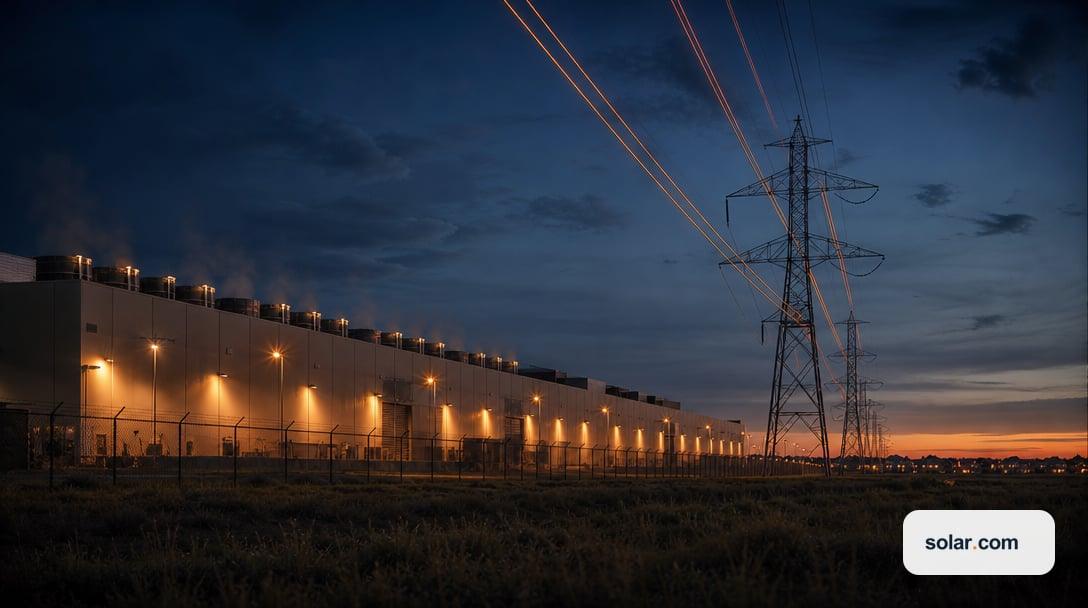
That’s roughly how grid costs work. A large data center can use as much power as a small city, and the costs spread out three ways:
- Standby power plants. Grid operators pay plants to be ready for the hottest and coldest days. Big new users mean less spare power, so that price jumps for everyone.
- New power lines. Data centers often need new lines and substations. That cost lands on the delivery part of your bill, sometimes in a completely different state than the data center.
- New power plants. Utilities build plants to keep up, then ask regulators to raise rates to pay for them. That request is called a rate case.
Where bills are already up
The clearest examples come from PJM, the grid serving 65 million people in 13 Mid-Atlantic and Midwest states plus D.C. Its standby-power auctions have set records three times in a row, mostly because of data center demand. As a result, households across the region have seen their monthly power bills increase.
| Where | Extra per month | Extra per year |
|---|---|---|
| Western Maryland (Potomac Edison) | ~$21 | ~$250 |
| D.C. suburbs, MD (Pepco, SMECO) | ~$18 | ~$210 |
| Baltimore area (BGE) | ~$16 | ~$200 |
| Virginia (Dominion Energy, 2026) | ~$11 | ~$135 |
| Maryland’s Eastern Shore (Delmarva) | ~$10 | ~$125 |
Sources: Maryland Office of People’s Counsel estimates for the year starting June 2026; Cardinal News on Dominion’s approved base-rate increase.
New Jersey families have been hit even harder. Bills rose as much as 20% in a single year after the 2025 auction. For a typical $150 monthly bill, that’s up to $30 more a month.
These hikes stack on top of rates that were already rising to maintain and modernize the grid in an era of extreme weather and rapid electrification.
Ready to see your numbers?
See your real solar price in 90 seconds
Enter your address — we'll show you the system, savings, and price for your exact roof.
Rate cases to watch in 2027
Utilities can ask for all the money they want, but it’s ultimately up to regulators (like public utility commissions) to approve, reject or shrink a rate request. These are the cases where data centers are part of the story as of November 2026.
| Utility | Status | Could add per month | Per year |
|---|---|---|---|
| Duke Energy Carolinas (NC) | Partial deal awaiting a ruling | ~$9 in 2027, ~$15 by 2028 | ~$180 by 2028 |
| Duke Energy Ohio | Pending | ~$8 in 2027 | ~$100 |
| FirstEnergy (OH) | Three-year plan pending | ~$4-$5 more each year | ~$50-$65 more each year |
| We Energies (WI) | Approved Nov. 2026 | ~$7-$8 in 2027 | ~$90 |
| Georgia Power | Rates frozen until 2028 | To be decided | To be decided |
Sources: WBTV, Ohio Consumers’ Counsel.
A few things to know:
- North Carolina: Data centers are expected to drive 80% of the state’s future power demand. The state Attorney General pushed back on Duke’s original request for an 18% increase.
- Georgia: Regulators approved $16 billion or more in new power plants, mostly for data center contracts. New utility rates won’t be set until 2028, and nobody has promised what comes next.
- Wisconsin: Pushback works. Regulators refused to charge households for part of the plants built for data centers, and the final hike came in well under the 16% first requested for homes.
Where you’re better protected
Not every bill is going up because of AI. The Cornell researchers found no clear data center price bump in New York or New England. And more states are making the lobster-eater pay for the lobster:
- Ohio (AEP Ohio): Big data centers pay for at least 85% of the power they reserve, even if they use less (POWER).
- Virginia (Dominion): Starting in 2027, the biggest users get their own rate class with 14-year contracts (Cardinal News).
- Oregon (PGE): Data centers cover 100% of local grid upgrades. The largest pay an extra fee that funds help for low-income families (Utility Dive).
- Missouri (Evergy): The largest users pay for 100% of their dedicated equipment and sign contracts of 12 years or more (KCTV5).
These rules mostly cover new data centers. They won’t refund the extra $10 to $20 a month already baked into bills in places like Maryland.
What you can do about it
Public comments and advocacy have been successful in slowing data center construction and utility rate hikes. You can make your voice heard at city council meetings and public utility commission hearings. However, the decisions that impact your electricity prices are ultimately in the hands of policymakers.
The strongest hedge against energy inflation is providing your own power at a lower cost than your utility can. Don’t want to pay for a power plant two states away? Build one right on your roof with solar panels.
Grid power costs about 20 cents per unit nationally. Rooftop solar often works out to 12 to 14 cents, and that price stays flat for 25+ years while utility rates climb.
A few ways to squeeze more savings out of solar:
- Pay less upfront. Check solar incentives in your state and claim every dollar you qualify for.
- Skip the long contract. If you’d rather not buy, a prepaid lease or PPA gives you more flexibility and better savings than a traditional 20-year lease.
- Add a battery, where it pays. A home battery stores cheap daytime solar for pricey evening hours and keeps your lights on if a strained grid can’t keep up. Home battery storage is crucial in California, and other places where utilties pay very little for your excess solar power.
Data centers and your bill: FAQs
Does a data center have to be near me to raise my bill?
No. Grid costs are shared across big regions. A New Jersey family can help pay for power lines built for Virginia data centers.
Why don’t data centers just pay their own way?
In more states, they’re starting to. But many older rules split grid costs among all customers, so households pick up a share.
How do I find my utility’s rate case?
Check your state utility commission’s website or local news. Most cases list public hearing dates and a way to comment online.
Will solar protect me from future rate hikes?
Yes, solar helps you avoid buying grid electricity at higher and higher rates. As utility rates rise, the value of your solar power increases because you’re offsetting more expensive grid electricity. You’ll still pay some fixed utility charges, so a properly sized system matters.
Do I need a battery?
Not always. A battery pays off most where evening rates are high, solar exports earn less, or outages are common.
Take control of your electric bill
You can’t vote on your utility’s next rate hike, but you can decide how much of your power comes from your own roof. With Solar.com, you can see a real price for solar on your home in about 90 seconds, then compare five ways to pay for the exact same system.
No door-knockers and no sales pressure. Go at your own pace, and get expert help only if you ask for it.
Your next step
See exactly what solar costs on your roof
We use satellite data and your utility rates to show your price and payback in about 90 seconds, with no sales calls.