Costco Just Took a Warehouse Off the Power Grid. Here's the Lesson for Your Home
Costco doesn’t do anything by accident. So when the warehouse giant cut one of its Florida distribution centers loose from the utility grid entirely, it pays to understand what they saw because the same benefits can apply to your home.
Let’s start with the problem. It’s a big one.
The grid is falling behind the weather
The short version: the grid was built for a different era, and demand is outrunning it. In its 2025 Long-Term Reliability Assessment, the North American Electric Reliability Corporation (NERC) flagged that nearly half the U.S. population faces high risk of power shortages over the next five years. Three things are stressing the system at once: peak demand is climbing, older power plants are retiring, and new infrastructure isn’t getting built fast enough to fill the gap.
Weather keeps testing those weak spots. A quiet Atlantic hurricane season sounds like good news, but it doesn’t mean fewer outages. As pv magazine USA reports, this year’s El Niño simply moves the stress somewhere else, think winter flooding and severe storms across the Southeast, plus more storm activity out West.
You’re paying more for a grid that isn’t more reliable
Here’s the frustrating part. Utilities are spending big to hold the line, and it isn’t necessarily buying you a better grid. In fact, The Brattle Group estimated just replacing grid infrastructure that’s 50-80 years old accounts for $10 billion in utility spending a year. That doesn’t account for adding net-new transmission; it’s just the cost of replacing poles & wires built before the VHS tape was introduced.
And that spending lands on your bill, as utilities recover their grid investments through electricity delivery rates that keep climbing.
Simply put: you’re paying more for electricity that goes out more often.
What Costco actually did about it
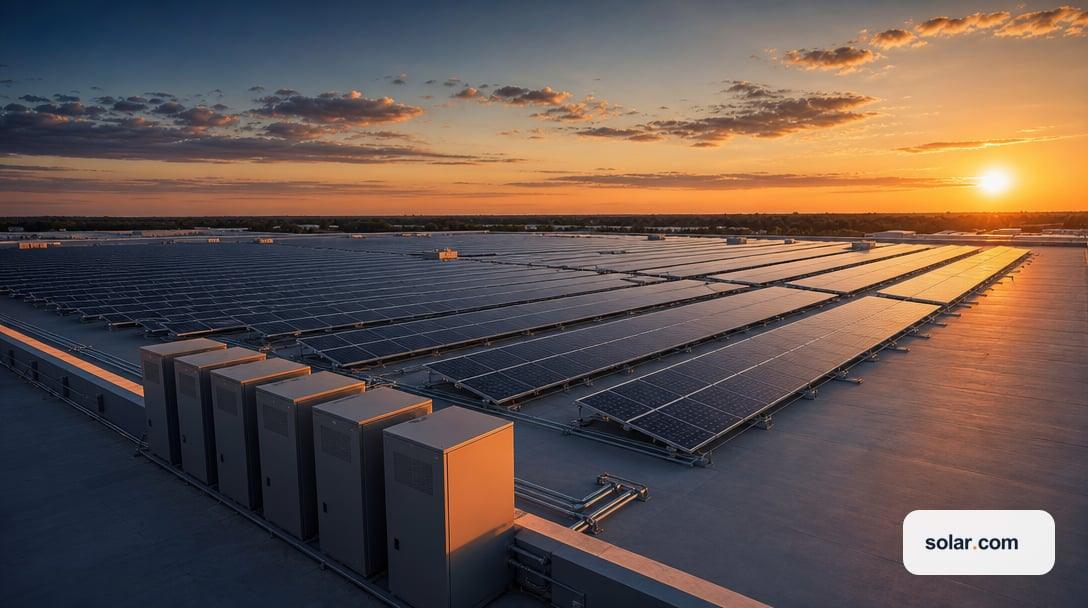
At its Port St. Lucie, Florida distribution center, Costco partnered with Trinity Energy to build its own on-site energy system with solar panels, battery storage, and EV charging. The site can now run 24/7 without the grid and keep critical data and refrigeration systems running when the grid fails.
Why do it? Costco pointed to three payoffs, and they map almost perfectly onto what a homeowner gets:
- Resilience. The facility keeps running through grid disruptions.
- Lower long-term energy costs, plus tax credits for solar and storage, and protection from rising utility rates.
- Reduced strain on the grid during the peak-demand hours when the system is most stressed.
Another bonus for Costco: solar and batteries went in faster than a traditional utility backup system would have.
Ready to see your numbers?
See your real solar price in 90 seconds
Enter your address — we'll show you the system, savings, and price for your exact roof.
The same benefits down to your house
You’re not running industrial refrigeration like Costco, but the benefits of on-site solar and battery storage also apply to homeowners.
Solar panels shave down the expensive daytime power you’d otherwise buy from a utility that keeps nudging rates higher. A home battery backup banks that energy for the evening. And when the grid drops, the battery system keeps your fridge running, your Wi-Fi up, and your lights on and allows your solar panels to keep producing energy.
Solar-only systems are typically shut off during power outages to protect utility workers repairing the grid.
The mindset shift Costco is signaling
For years, solar got sold almost entirely on payback periods, when will the system pay itself off and how much will the net savings be?
But resilience from backup power is a fast-rising advantage. The ability to operate off-grid is starting to look like reliability insurance, not just a return on investment. Costco is a deeply trusted American brand with a finance team that questions every dollar. When a company like that decides on-site solar and storage beats leaning on the grid, homeowners weighing the same trade-offs should take note.
How to run your own numbers
Fortunately, you don’t need Costco’s finance team to run the numbers on your solar and battery system. Just enter an address, get a price for your roof in 90 seconds, and see what solar (and a battery) would actually cost for your home.
Costco did the math on resilience and lower bills. You can too, just at a scale that fits your roof.
Your next step
See exactly what solar costs on your roof
We use satellite data and your utility rates to show your price and payback in about 90 seconds, with no sales calls.