PowerUp New Jersey: How to Get Paid for Your Home Battery
New Jerseyans have watched their electric bills climb for years. Now the state wants to pay some of you to help fix the problem.
On November 12, the New Jersey Board of Public Utilities (BPU) voted unanimously to approve a new program called PowerUp New Jersey, according to the New Jersey Monitor. It pays homeowners to let their home batteries, smart thermostats and other devices help the power grid on its busiest days.
What is PowerUp New Jersey?
Simply put: on a hot summer afternoon, everyone cranks the AC at once, and the grid strains to keep up. When that happens, your home battery can send some of its stored power to the grid, or your thermostat can ease off a few degrees, and you get paid for helping.
This setup is called a virtual power plant, or VPP. Thousands of small devices in people’s homes work together like one big power plant.
How the PowerUp battery payment works
- It’s a yearly payment, not a rebate. You get paid once a year, for 10 years.
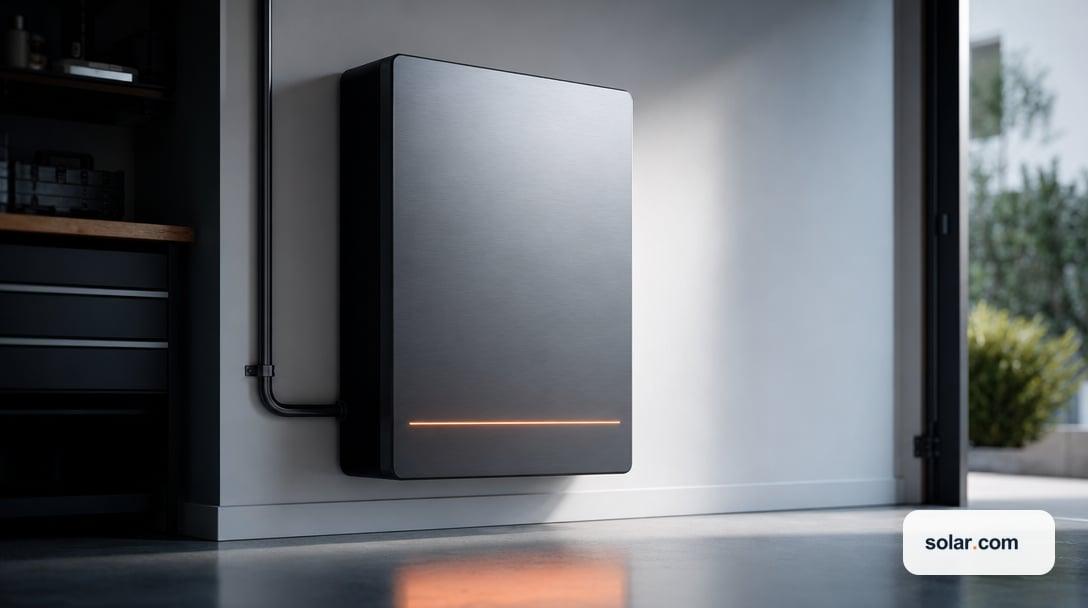
- New batteries can earn up to $200 per kilowatt (kW) each year. Batteries that are already installed can earn up to $100 per kW each year. A kilowatt measures how much power your battery can put out at once.
- You get paid for what your battery actually delivers. Your utility can call up to 35 “events” a year, each up to 3 hours long, with at least 21 hours’ notice. The more power your battery sends during those events, the more you earn.
- You sign up through a company, not the utility. Your installer or battery company enrolls you, collects the payment and shares it with you. How much you keep depends on your deal with them.
What could you earn? The state’s own example uses a 10 kW battery. Batteries usually hold some power back for backup, so this one sends out about half its full power during events. That earns about $960 a year, or roughly $9,600 over 10 years. That’s the total payment. Your share depends on your agreement with your provider.
These numbers aren’t final. The BPU approved them on November 12 as starting guidelines. Each utility has to file its own plan by February 12, 2027, and payment rates and rules could change before sign-ups open. Space is limited, and spots are first come, first served.
How to sign up
Sign-ups aren’t open yet, and the BPU hasn’t posted the final rules. Here’s what you can do now:
- Bookmark the program page. Enrollment dates will be posted at cleanenergy.nj.gov/powerupnj.
- Check what you already own. If you have a smart thermostat or EV charger, ask your utility whether it runs a program for it. PowerUp builds on those programs.
- If you have a battery, call your installer. Ask whether they plan to enroll customers in PowerUp at the $100/kW rate.
- If you’re shopping for solar, ask about a battery from the start. Get quotes that include PowerUp in the math.
Before you sign anything, ask these questions:
- Will you enroll my battery in PowerUp, or do I do it myself?
- Who gets the incentive: me or you?
- How many times a year can the utility use my battery?
- How much backup power will I keep during an event?
Ready to see your numbers?
See your real solar price in 90 seconds
Enter your address — we'll show you the system, savings, and price for your exact roof.
Why a battery is worth it in New Jersey
New Jersey has some of the best net metering in the country. When your solar panels make more power than you use, you get full credit for it on your bill. So what’s the value of having battery storage with your solar system?
Your lights stay on. Here’s something a lot of people don’t know: solar panels without a battery shut off when the power goes out. That’s a safety rule to protect utility workers fixing the lines. A battery keeps your fridge, sump pump and Wi-Fi running during blackouts. If you lived through Superstorm Sandy, you know what that’s worth.
You get paid for being ready. Net metering pays you for the power your panels make. It doesn’t pay you for being there when the grid needs help. PowerUp does, and it’s a valuable incentive.
You save during the priciest hours. PSE&G’s time-of-use plan charges about 60 cents per kilowatt-hour on summer weekdays from 4 to 9 p.m. Overnight, it’s about 10 cents. A battery can charge when power is cheap and run your home when it’s expensive.
You’re covered if the rules change. Net metering isn’t guaranteed forever. A 2018 state law lets the BPU take another look once solar reaches 5.8% of the state’s electricity sales. The BPU says New Jersey passed that mark in 2024, and a review is underway. If the state cuts the credit for power you send to the grid, a battery lets you keep more of your solar power for yourself.
You help bring everyone’s bills down. Bills jumped as much as 20% in 2025, mostly because of what the grid pays power plants to be ready for the hottest days. PowerUp’s goal is to cut that peak demand by 3%. State staff estimate that could save about $60 million a year. This fall’s rate freeze held bills flat, but it’s a patch, not a cure. Programs like PowerUp go after the actual problem.
The bottom line
PowerUp is the first New Jersey program to pay you directly for what a home battery does for the grid. If you already own a battery, get ready to sign it up. If you’re pricing solar, ask about a battery from the start.
Your next step
See exactly what solar costs on your roof
We use satellite data and your utility rates to show your price and payback in about 90 seconds, with no sales calls.