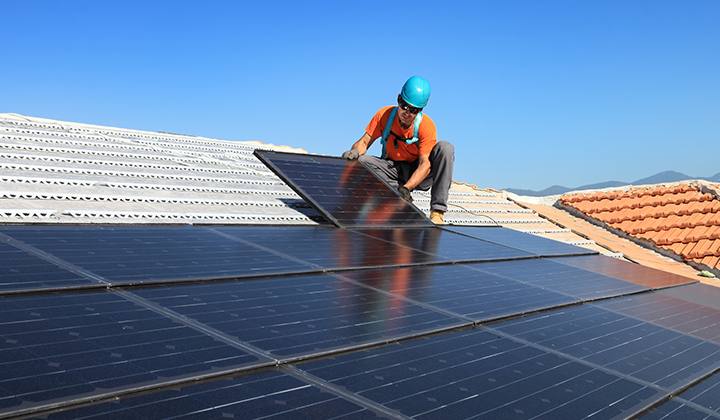
The World Just Hit 3 Terawatts of Solar: Unpacking the New Milestone
The planet just passed a number that would’ve sounded like science fiction 15 years ago. Global installed solar capacity has crossed 3 terawatts (TW), according to BloombergNEF. That’s 3 trillion watts of generating capacity soaking up sunlight around the world.
So how much power is that? Think of a terawatt as roughly the output of 1,000 large nuclear reactors running flat out. Three terawatts of solar, on a good day, can power hundreds of millions of homes.
Here’s another way to picture it: a typical home array runs about 4,000 watts. It would take roughly 750 million systems that size to add up to 3 TW. Here’s how we got there and why it’s worth celebrating.
We got here fast, and the pace is accelerating
It took nearly 70 years from the invention of the solar cell for the world to install its first terawatt of solar in 2022. The second terawatt was added by 2024, and the third was completed this year. By 2036, BloombergNEF expects the world to add 6 more terawatts of solar power.
China is driving much of the recent growth, but the more interesting story is happening in places most Americans never associate with solar.
Take Pakistan. According to the Centre for Research on Energy and Clean Air (CREA), the country went from under 1 GW of solar panel imports in 2018 to over 51 GW by early 2026. That’s one of the fastest consumer-led energy shifts on record. It wasn’t built by government mandate. It was built by families and businesses putting panels on rooftops because the math worked.
3 TW is more than just a milestone
The 3 TW milestone is more than just a number to celebrate; there are tangible benefits that come with installing solar capacity.
It’s a hedge against fossil fuel volatility. Pakistan’s solar boom helped it avoid more than $12 billion in oil and gas imports through February 2026, with another $6.3 billion in potential savings this year if prices stay high, according to CREA. As tensions flared around the Strait of Hormuz, one of the world’s most contested energy chokepoints, those rooftop panels acted like an insurance policy. Every gigawatt installed shrank the country’s exposure to price shocks it couldn’t control.
It drives down costs through scale. More manufacturing means cheaper panels and better technology. And the tech keeps improving. Tandem PV just shipped its first production-quality perovskite-silicon panel, reports pv magazine, a record 30.4% efficient module with a roadmap toward 37% by 2030. Most panels on the market today sit between 22% and 24%. As LONGi’s founder has noted, each 1% gain in cell efficiency translates into more than a 5% cut in system costs.
It expands clean energy access and cleaner air. Renewables now offer the lowest-cost path to electricity for millions of low- and middle-income households worldwide. Less fossil fuel burned means less pollution in the communities living next to power plants.
Ready to see your numbers?
See your real solar price in 90 seconds
Enter your address — we'll show you the system, savings, and price for your exact roof.
Why US homeowners can, and should, take part
Perhaps the best part of the solar boom is that individuals can take part, especially in a mature solar market like the US, and enjoy the benefits of a personal power plant.
-
Lower energy costs. Solar lets you produce power at a fixed cost instead of paying whatever your utility charges next year. That’s a real hedge against rising energy costs.
-
Energy resiliency. Pair panels with home battery storage to gain independence from your utility and get backup power when the grid fails.
-
Cleaner air where you live. Every kilowatt-hour you generate is one your utility doesn’t have to burn gas to produce. For instance, Pittsburgh saw a dramatic decrease in heart-related ER visits following the closure of a coal plant in 2016.
Ready to see what solar can do for your home? Get your price in 90 seconds on solar.com and see your bill savings potential.
Your next step
See exactly what solar costs on your roof
We use satellite data and your utility rates to show your price and payback in about 90 seconds, with no sales calls.