SCE's 2026 Winter TOU-D-PRIME Rates: What EV Drivers Need to Know
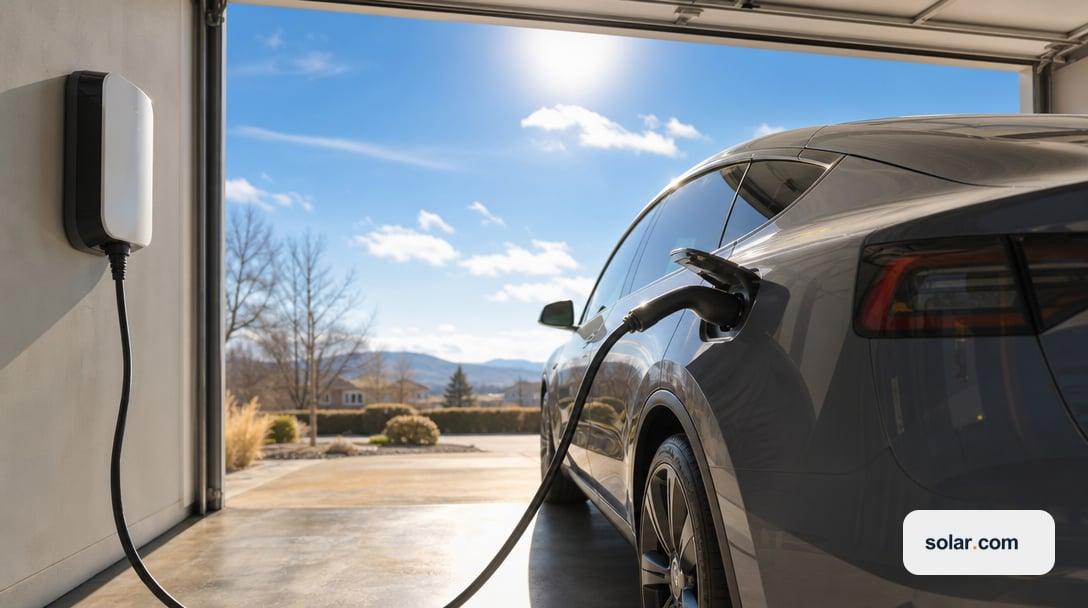
Southern California Edison (SCE) has posted its new winter rates for the TOU-D-PRIME plan, and EV drivers can expect to pay more to charge at home overnight. The new overnight off-peak price is now 30 cents per kilowatt-hour (kWh), a 25% increase from last year’s winter rate for the same period.
Here is what changed, who it affects, and what you can do about it.
How SCE’s winter rates changed
On a time-of-use (TOU) plan, the price of electricity depends on the time of day and the season. TOU-D-PRIME is SCE’s plan for homes with an electric vehicle, a home battery, or an electric heat pump. New solar customers are also placed on it.
SCE splits the year into two seasons. Summer runs June through September, and winter runs October through May. Here are the current TOU-D-PRIME prices, as posted by SCE:
| Period | Hours | Summer (June-Sep) | Winter (Oct-May) |
|---|---|---|---|
| Peak | 4-9 p.m. | 61¢ weekdays, 39¢ weekends | 45¢ |
| Off-peak | Summer: all other hours. Winter: 9 p.m.–8 a.m. | 26¢ | 30¢ |
| Super off-peak | Summer: none. Winter: 8 a.m.–4 p.m. | None | 24¢ |
Prices are per kWh, for customers who get both delivery and generation from SCE. The plan also has a $0.79 daily base charge. If you buy power through a community choice provider, your prices will be different. Source: SCE
The big change is the winter off-peak price. It rose from 24¢ last winter to 30¢ this winter, an increase of 6 cents per kWh. That means overnight power now costs more in winter (30¢) than in summer (26¢). Meanwhile, the cheapest power of the year is the winter super off-peak window in the middle of the day, when solar power is plentiful on the grid.
For more on how SCE’s plans work, see our beginner’s guide to SCE time-of-use rates.
How this affects EV drivers
The change matters most for EV owners who plug in at home after work. Overnight charging is convenient, and it has long been the cheapest time to charge. This winter, that is no longer true on TOU-D-PRIME.
Let’s run the numbers for an average driver. Americans drive about 13,476 miles a year (37 miles a day), according to the Federal Highway Administration. A typical EV uses roughly 0.30 kWh per mile, so this driver needs about 11.1 kWh per night, or about 333 kWh per 30-day month.
| Charging rate | Price per kWh | Monthly cost (333 kWh) | Extra cost at new winter rate |
|---|---|---|---|
| New winter off-peak | 30¢ | $99.90 | - |
| Summer off-peak | 26¢ | $86.58 | $13.32 more per month |
| Last winter’s off-peak | 24¢ | $79.92 | $19.98 more per month |
In dollars and cents, an average driver will pay about $13 more per month than in summer, and about $20 more per month than last winter. Across the eight-month winter season, that is roughly $160 more than last year.
Your own numbers will depend on how far you drive and how efficient your car is. Larger SUVs and trucks use more energy per mile. To estimate your cost, multiply your daily miles by your car’s kWh per mile, then by 30 days, then by the rate.
Ready to see your numbers?
See your real solar price in 90 seconds
Enter your address — we'll show you the system, savings, and price for your exact roof.
What you can do
Charge during super off-peak hours when you can
The winter super off-peak window runs from 8 a.m. to 4 p.m., every day, at 24¢ per kWh. That is the same price overnight charging cost last winter. Moving our example driver’s 333 kWh into this window would cost $80 a month instead of $100, saving about $20 compared with charging overnight.
Most EVs and home chargers let you set a charging schedule in the car’s app. The catch is that many commuters are away from home during those hours, with their car parked at work. If that is you, try topping up at home on weekends from 8 a.m. to 4 p.m., when the same low price applies.
Pair solar panels with battery storage
Solar panels make the most power in the middle of the day, which is exactly when many drivers are not home to charge. A home solar battery makes that midday power more flexible. It stores extra solar power during the day so you can use it at night, including to charge your car.
See the minute-by-minute value of battery storage on SCE’s TOU-D-PRIME rate here.
Storage is especially useful in California today. Under the state’s Solar Billing Plan (NEM 3.0), solar power you send back to the grid earns a fairly low credit. That makes it more valuable to store your solar power and use it yourself than to sell it.
Solar and storage also make you less dependent on utility pricing in general. SCE’s rates have changed more than a dozen times since 2020, based on rate change advisories from the California Public Utilities Commission, and a stalemate on new Wildfire Fund legislation in Sacramento threatens to drive utility rates even further.
The bottom line
SCE’s new winter rates make overnight charging on TOU-D-PRIME about 25% more expensive than last winter. For an average driver, that means about $20 more per month through May. Shifting charging to midday can help if your schedule allows it, and solar plus storage can help you take more control over when, and at what price, your car gets its power.
Your next step
See exactly what solar costs on your roof
We use satellite data and your utility rates to show your price and payback in about 90 seconds, with no sales calls.