Batteries Are Becoming Standard With Solar And We're All Benefitting From It
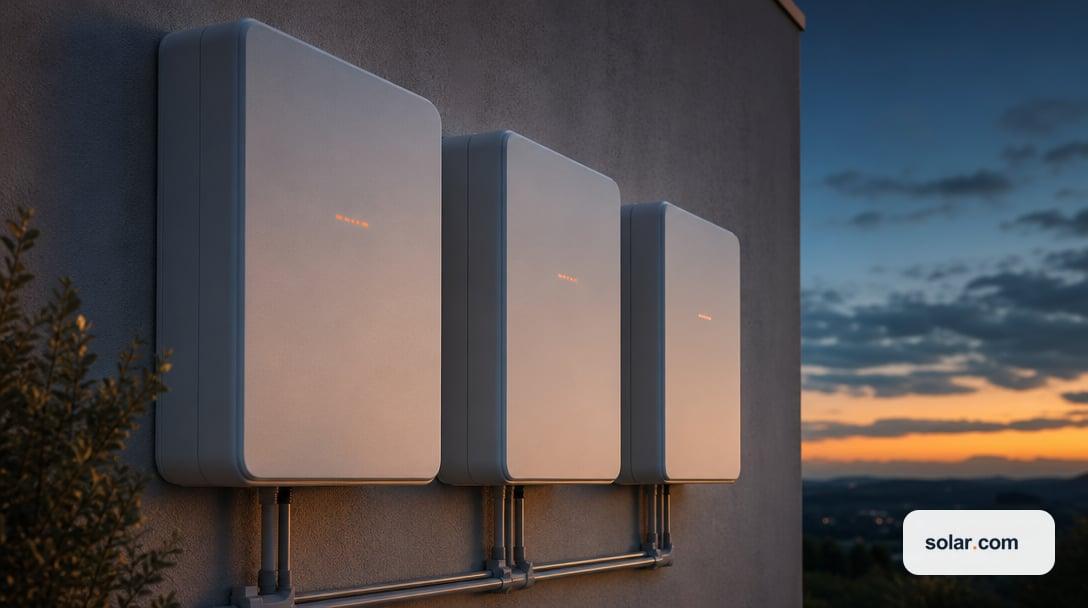
Not long ago, a home battery was a nice extra you added to solar to gain backup power for grid outages. That is changing fast. In 2025, more than one in three new home solar systems in the US came with a battery.
And a home battery today can do more than keep your lights on during an outage. In many places, it can also earn you money by helping the power grid when demand is high. If you are thinking about solar, here is what that shift means for you.
Batteries are becoming the new normal
A new report from Lawrence Berkeley National Laboratory looked at about 450,000 solar systems installed in 2025. It found that 37% of new home solar systems included a battery, up from 25% in 2024.
California leads by far. There, 74% of new home solar systems came with a battery. That is mostly because of the 2023 “NEM 3.0” rule change that cut what utilities pay for extra solar power sent to the grid. Storing that power to use at night became the better deal.
The bigger news is outside California. In the rest of the country, the share of new solar systems with a battery more than doubled, from 7% to 17%. Arizona and Texas saw especially big jumps.
85,000 homes acted like a power plant
On the evening of October 6, California’s power grid got help from an unusual source. According to Tesla, 85,774 homes with Powerwall batteries sent power to the grid at the same time. At the peak, they delivered 601 megawatts.
That’s about as much as a typical natural gas power plant puts out.
Evenings are when the grid is under the most strain. The sun is setting, so solar farms produce less. Meanwhile, people are home running air conditioning, cooking, and charging cars. When thousands of home batteries share power at once, the grid needs less help from expensive backup power plants.
Ready to see your numbers?
See your real solar price in 90 seconds
Enter your address — we'll show you the system, savings, and price for your exact roof.
How you get paid: virtual power plants
A group of home batteries working together like this is called a virtual power plant, or VPP. Your battery stays at your home. When the grid needs extra power, the program sends a signal, and your battery shares some of its stored energy. In return, you get paid, usually through bill credits or cash payments.
California has state programs that pay battery owners for this kind of help. Other states have programs too, run by utilities, battery makers, and solar companies.
The idea is also growing beyond batteries. On October 6, the company Renew Home renamed itself Everyday Electric and launched a “whole-home” VPP. It can use smart thermostats, electric cars, batteries, and solar panels. The company already works with more than 8 million thermostats. It says it aims to save customers $5 billion over the next five years.
Today’s batteries are more powerful
Battery size has not changed much. The typical home battery stored 13.5 kilowatt-hours in both 2024 and 2025. That is enough to keep basics like a fridge, lights, and Wi-Fi running for several days, longer if you budget your solar and storage carefully.
What did change is how much power a battery can deliver at one time. The typical output jumped from 6 kilowatts to 11.4 kilowatts. Berkeley Lab credits this mostly to the Tesla Powerwall 3. More output means a battery can run bigger appliances, like central air or a well pump, during an outage. It also means more power to share with the grid.
See how the Powerwall 3 stacks up in our best battery picks for 2026.
Questions to ask before you sign up
If a VPP program is available where you live, ask these questions first:
- Who runs the program: my utility, my battery maker, or my solar company?
- How will I be paid, and how much have members actually earned in past years?
- How many times a year can the program use my battery?
- How much charge will my battery always keep for an outage?
- Does joining affect my battery’s warranty?
The bottom line
A home battery used to be all about backup power. Now it can also earn you money and help keep the grid steady on its busiest nights. If you are pricing solar, ask about a battery from the start. Then ask what that battery could earn where you live.
Your next step
See exactly what solar costs on your roof
We use satellite data and your utility rates to show your price and payback in about 90 seconds, with no sales calls.