Florida Sets Standard for Faster & Cheaper Rooftop Solar
Florida just proved something the rest of the country needs to see: you can grow home solar without a new subsidy.
A permitting law that took effect last summer cut approval times, opened the door to remote inspections, and helped the state install more than 110 megawatts of home solar in the first three months of 2026. BloombergNEF called Florida the fastest-growing state for residential solar in the country. That’s a win worth celebrating, and it happened while most of the nation braced for a down year.
Here’s the backdrop. Until last December, the 25D residential solar tax credit knocked 30% off eligible home solar costs. It expired at the end of last year under the One Big Beautiful Bill Act (OBBBA). Nationally, that stung. Wood Mackenzie and the Solar Energy Industries Association now forecast the residential market will contract 21% this year.
Florida went the other way, and it did it by chipping away at the “soft costs” that inflate residential solar costs.
What Florida actually did
While most states are bracing for a down year, Florida led the nation in the first 13 weeks of 2026 with approved permits for at least 450 megawatts of home solar, a fourfold jump over the same stretch in the prior two years. BloombergNEF projects the state could install 710 megawatts in 2026, up 62% from 439 megawatts in 2025.
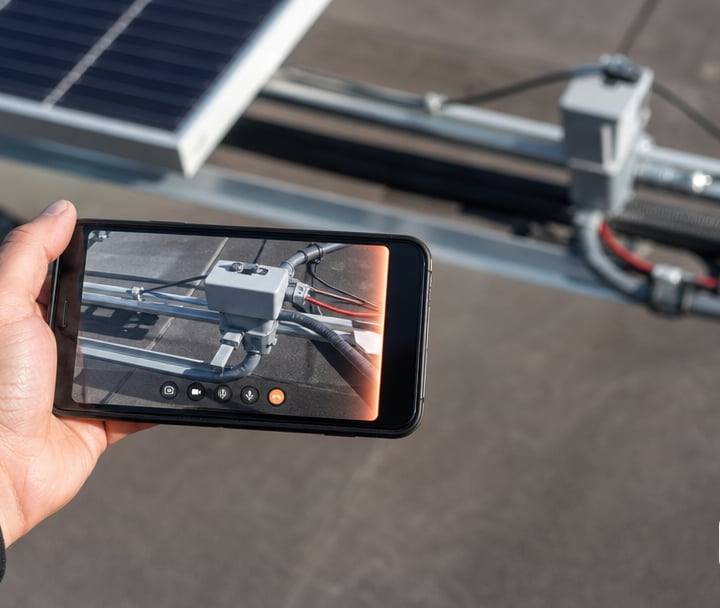
No new subsidy did that. A permitting law did. It cut permit approval times from 20 days to within five, allowed third parties to inspect systems, and let inspectors use photos, video, or drone footage instead of always driving out in person. Starting in 2027, Florida adds a universal residential permit application so contractors stop refiling the same paperwork on a different form for every jurisdiction. Bill Johnson of the Florida Solar Energy Industry Association has railed against that form mess for 17 years.
Simply put: Florida is lowering residential solar panel costs by reducing bureaucracy.
Why this matters if your energy bills are high
Faster, cheaper permitting isn’t a Florida-only story. Here’s what it means for your wallet, wherever you live.
1. Florida’s rules could become the template
Permitting reform passed in conservative Florida with bipartisan support, and California and Maryland have their own versions. When one big state shows that streamlined permitting speeds up builds and lowers costs without spending public money, other states pay attention.
Simply put: It’s easier to trace than draw. Legislatures in other states can simply refer to Florida’s streamlined permitting policies instead of drafting their own from scratch.
2. Soft costs are a huge slice of your quote, and permitting is only half the fix
Look at a typical $31,000 solar quote and about $9,000 of it has nothing to do with the panels on your roof or the crew bolting them down. Those are soft costs: permits, inspections, fees, customer acquisition, and sales commissions.
Soft costs are roughly 30% of a home solar project’s total cost in the US. That’s the reason the same rooftop system that runs about $31,000 here is far cheaper in Australia and Germany. Same panels. Same physics. Different paperwork.
Streamlined permitting knocks down one part of that. Sales commissions are the other, and this one is on the table today. It’s often the single largest soft cost a homeowner can cut. That’s why we eliminated sales commissions from Solar.com.
Solar.com’s Advice: If you’re getting quotes outside of solar.com and one quote is thousands higher than a comparable one, the gap is usually commissions and fees, not better panels. Ask for an itemized breakdown and make installers explain the difference.
3. We’re watching a healthier industry take shape
For years, the 30% federal tax credit quietly reimbursed homeowners for a soft cost problem the industry never fixed. The credit roughly canceled out the 30% you were overpaying in friction. Take the credit away and that friction sits bare on your quote.
That’s a real problem. It’s also a fixable one, and Florida is the proof. With the federal crutch gone, the industry finally has to compete on price and go after the root cause of high building costs. Namely permitting. This is the rebirth of a residential solar market that leaned on a federal tax credit for too long.
A couple of things to keep in mind as you shop:
- Check your net metering rules. Florida is one of the few states that still offers full net metering, where the utility credits you for extra electricity you send to the grid. With power prices climbing, that credit is worth more every year, and the grid acts as a free battery for your midday surplus. In areas with weak credits or time-of-use rates, a home battery backup is essential to making the math work.
- Ask about permitting timelines. You can’t change your county’s process by yourself, but you can ask an installer how long permitting takes in your area and whether remote inspection is allowed. Slow, in-person-only jurisdictions cost more.
Ready to see your numbers?
See your real solar price in 90 seconds
Enter your address — we'll show you the system, savings, and price for your exact roof.
The takeaway
This is great for Florida, and hopefully a sign of better things to come everywhere else. Streamlined permitting means faster build times, lower soft costs, and better outcomes for homeowners and installers alike. The cost was always there. The credit just hid it. Now you get to see it, question it, and cut it.
Your next step
See exactly what solar costs on your roof
We use satellite data and your utility rates to show your price and payback in about 90 seconds, with no sales calls.