New Solar Tariffs in 2026: What They Mean for Rooftop Solar Prices
Will the new “232” solar tariffs make going solar more expensive? Short answer: yes, but it depends on the panel manufacturer, and homeowners have ample opportunity to lock in pre-tariff prices for their home. Here’s what actually happened, and what it means for your electricity costs.
What changed, and when
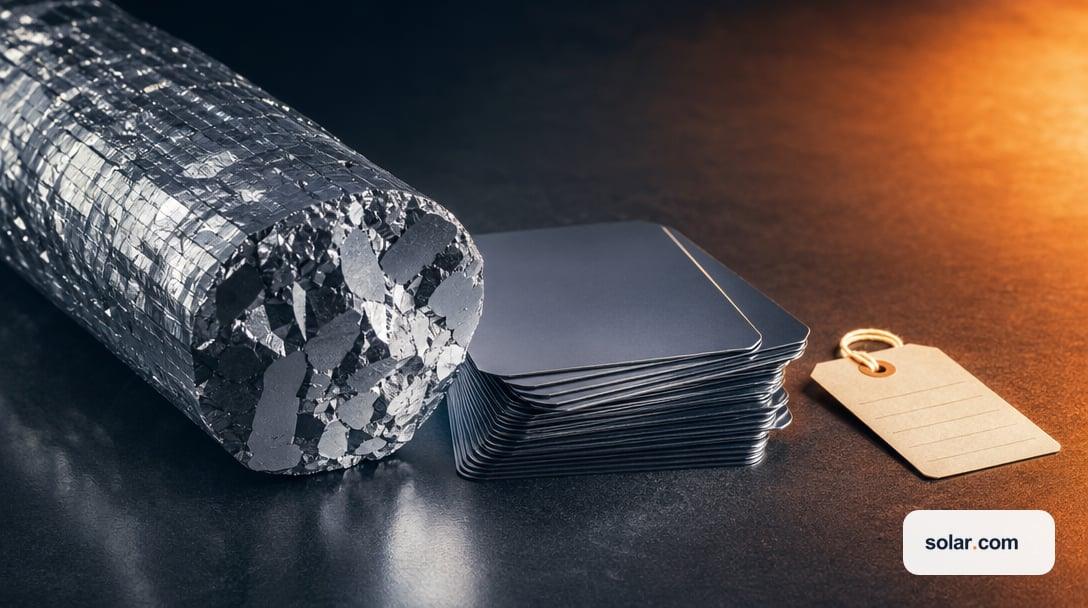
On August 6, 2026, the White House signed a proclamation putting new trade protections on imported polysilicon and the products made from polysilicon (known as derivatives). Polysilicon is the raw material that goes into most solar panels (and computer chips).
The order takes effect on December 4, 2026 and sets minimum import prices (a price floor foreign sellers can’t undercut):
- $0.22 per watt for solar cells
- $0.38 per watt for solar modules
- $21 per kilogram for polysilicon
- $100 per kilogram for polysilicon ingots and wafers.
It also adds a 15% ad valorem duty (a tax based on the item’s value) on “downstream polysilicon derivatives”, a fancy term for products made from polysilicon.
The action came out of a Section 232 investigation, a part of a 1962 trade law that lets a President restrict imports for national security reasons. That’s the same legal tool behind the steel and aluminum tariffs you may have heard about. These new duties replace a narrower solar tariff from Trump’s first term that expired in February 2026.
Why the new tariffs?
The reasoning here is about manufacturing, not homeowners. According to the proclamation, the U.S. share of global polysilicon production fell from 50% in 2005 to under 2% in 2024. On solar ingots, wafers, and cells, the country is almost entirely dependent on imports. The White House calls that a national security problem and wants to rebuild a domestic supply chain.
There’s already progress to build on. As Canary Media reports, Inflation Reduction Act manufacturing incentives plus targeted tariffs made the U.S. self-sufficient in module production in just a few years. So this doesn’t start from zero. The country makes plenty of panels now, even if the deeper components still come from abroad.
Ready to see your numbers?
See your real solar price in 90 seconds
Enter your address — we'll show you the system, savings, and price for your exact roof.
How this hits residential solar pricing
Tariffs raise the cost of imported equipment, and some of that flows down to the panels on your roof. But panels are only one slice of a solar project.
- A typical residential system runs roughly $25,000 to $31,000 before incentives.
- The panels themselves are a fraction of that. Much of your cost is “soft costs”: permitting, labor, sales, and design.
- New tariffs on the imported portion of the hardware work out to a small bump on the total project, not a doubling of your price.
Here’s where timing matters: the tariff takes effect December 4, 2026. Panels contracted and priced before that date lock in today’s pricing. After it, expect imported panel costs to climb, and don’t assume domestic panel pricing to stay flat. Even U.S. manufacturers source imported materials and components, so domestic module pricing will likely tick up too.
“We’ll likely see modest pricing moves from the core, quality residential solar vendors,” said REC Policy Strategist Brian Lynch. “The very low-priced vendors importing products will have the highest exposure and will likely see those panels double, or more, in price.”
We don’t yet know exactly how much the tariff will raise rooftop solar prices, but our mantra remains the same: The best time to go solar was yesterday; the second best time is today.
Get a price for your roof in 90 seconds on Solar.com and get ahead of the upcoming tariffs.
Your next step
See exactly what solar costs on your roof
We use satellite data and your utility rates to show your price and payback in about 90 seconds, with no sales calls.