Types of Solar Batteries: Which Fits Your Home?
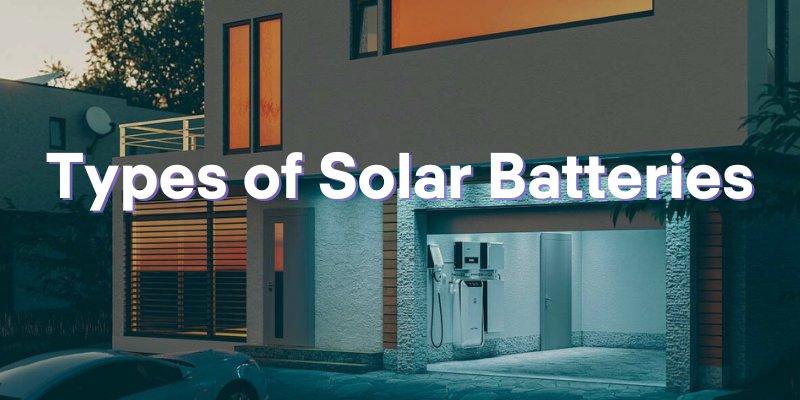
Solar batteries are an incredible technology. While they’re best known for providing backup power, they also play a crucial role in squeezing every drop of value out of rooftop solar power — especially if your utility doesn’t offer full value for your excess daytime power.
Home batteries can be categorized in a few ways, including what’s inside (i.e., their “chemistry”) and what they can do.
The main types, by what's inside, are lithium iron phosphate (LFP), other lithium-ion batteries such as NMC, lead-acid and flow batteries. LFP is now the standard for home solar: more than 9 in 10 installers on our marketplace that sell batteries list at least one LFP model.
Beyond chemistry, two choices shape what you get:
- Backup vs “No-Backup”: whether the battery keeps your power on in an outage
- AC vs DC Coupled: how it connects to your solar.
Below, we compare the types using our installers' current equipment lists.
Jump ahead:
- Home Battery types at a glance
- Pros and cons of each type
- What installers on our marketplace offer
- Backup vs no-backup batteries
- AC vs DC-coupled batteries
- What's new in 2026
- Which type is right for you?
- Frequently asked questions
Types of solar batteries at a glance
| LFP | NMC lithium-ion | Lead-acid | Flow | Sodium-ion (new) | |
|---|---|---|---|---|---|
| Common in homes today? | The standard: more than 9 in 10 installers on our marketplace that sell batteries list one | Fading: about 1 in 20 list one we could confirm is NMC | Rare outside off-grid setups; none on our installers' price lists | No: built for businesses and utilities | Not yet: none on California's list of certified battery equipment |
| Typical lifespan or cycles | 10- to 15-year warranties; Enphase covers 15 years or 6,000 cycles. Lab estimate: about 16 years | Generac covers 10 years or about 2,500 full cycles. Lab estimate: about 13 years | About 1,400 to 2,000 cycles for large cells, fewer for 12-volt blocks | The liquid can last decades; stacks and pumps get replaced about every 10 to 12 years | Too new to judge for homes |
| Usable capacity | Nearly all of it | Most of it; grid-scale systems stay under about 90% charge for safety | About 58% to 80%, depending on how fast it's drained | Its full rated capacity | No home products to compare yet |
| Safety and heat | Very stable; no need to cap its charge for safety | Grid-scale systems cap their charge for safety | Low fire risk, but contains lead and acid | Low fire risk; water-based liquid | Too new to judge |
| Maintenance | None | None | Flooded types need water added | Pumps and parts need service | Too new to judge |
| Size and weight | Heavier for the same storage: home units weigh about 25 to 35 lb per kWh | Lighter for the same storage | Heaviest for the energy you can use: Often between 55 to 65 lb per kWh | Large tanks | Bulkier than LFP for now |
| Best fit | Almost every home, for savings and backup | Systems that already have one | Off-grid cabins on a tight budget | Businesses and utilities | Worth watching, not buying yet |
Sources: Enphase IQ Battery, FranklinWH aPower 2 and Generac PWRcell 2 data sheets; Pacific Northwest National Laboratory's 2022 storage cost and performance assessment (lab estimates for grid-scale systems used daily); California Energy Commission equipment lists (Oct 2026); current price lists of active installers on our marketplace (Oct 2026). Disclosure: Solar.com is a Tesla Certified Installer.
Solar battery types, pros and cons
Lithium iron phosphate (LFP)
LFP is a kind of lithium-ion battery that uses iron and phosphate instead of nickel and cobalt. It's now inside most home batteries, including the Tesla Powerwall 3, every Enphase IQ Battery and the FranklinWH aPower line.
- Pros: the longest life of the common types; you can use nearly all of its capacity; very stable, with no need to limit charging for safety; no nickel or cobalt.
- Cons: heavier than NMC for the same storage. A home unit weighs about 170 to 360 pounds installed, so it goes on a garage wall, an outside wall or the floor.
NMC lithium-ion
NMC batteries use nickel, manganese and cobalt (hence the acronym NMC). They store more energy per pound than LFP, which matters more in a car than on a garage wall. In home batteries they're fading. Generac's PWRcell 2 is one of the few current home batteries we could confirm uses NMC. Older models such as the Tesla Powerwall 2 also used NMC.
- Pros: lighter for the same storage.
- Cons: a shorter life than LFP: about 4,000 cycles vs 6,000 in a national lab analysis of grid-scale systems; those systems also cap how full NMC charges for safety; uses nickel and cobalt.
Lead-acid
The oldest rechargeable battery is still around, mostly in off-grid and DIY setups. Flooded types need regular upkeep; sealed types, called AGM and gel, don't.
- Pros: a proven technology; widely recycled; low fire risk.
- Cons: you can use only part of its capacity; far fewer cycles than lithium; heavy and bulky.
Flow batteries
A flow battery stores energy in two tanks of liquid that are pumped past a membrane. The liquid barely wears out, but the systems are large and need pumps. Today they're built for businesses and utilities, not homes.
Other types you may see listed
- Saltwater: these all but disappeared from the U.S. home market. None are on California's list of certified battery equipment.
- Nickel-cadmium: cadmium is toxic, and these are rarely used for home solar. None are on California's list either.
Ready to see your numbers?
See your real solar price in 90 seconds
Enter your address — we'll show you the system, savings, and price for your exact roof.
Which batteries installers on our marketplace offer
We checked the current battery price lists of the active installers on our marketplace (Oct 2026). 86% of them sell at least one battery. Of those:
- More than 9 in 10 list an LFP battery, and about 8 in 10 list only LFP batteries.
- About 85% of the battery models they list are LFP.
- Only about 1 in 20 list a battery we could confirm is NMC.
- Nearly all (95%) list an AC-coupled battery. About 6 in 10 also list a battery with a built-in solar inverter, almost always the Tesla Powerwall 3.
- About 1 in 3 list a no-backup version of a battery, and about 1 in 3 list a whole-home backup option that installs at the electric meter.
The LFP batteries these installers list most often:
- Enphase IQ batteries: offered by ~85% of installers that sell batteries
- Tesla Powerwall 3: offered by ~60% of installers that sell batteries
- FranklinWH aPower models: offered by ~40% of installers that sell batteries
For installed prices by model, see The Best Solar Batteries of 2026.
Backup vs no-backup batteries
This choice changes what happens in a blackout, and how much the battery system costs.
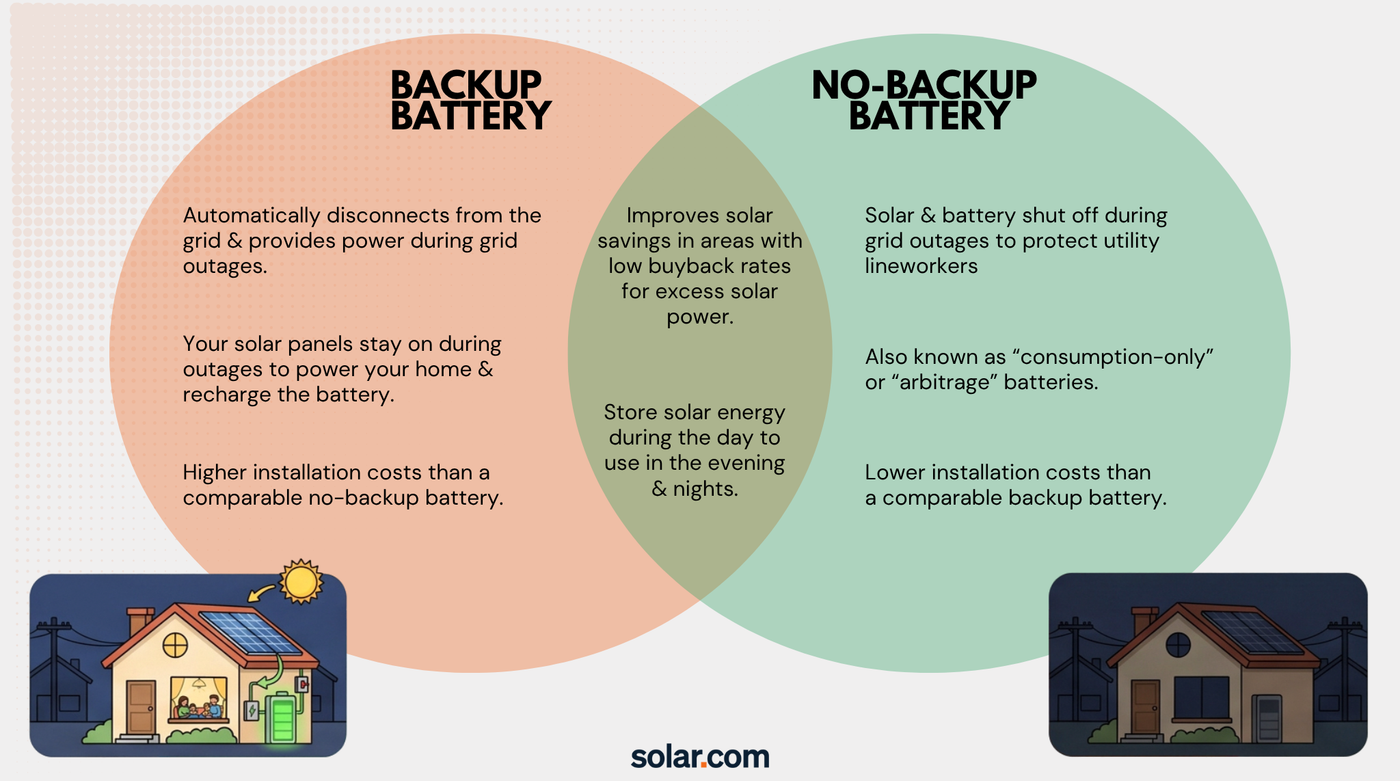
A backup battery keeps some or all of your home running when the grid goes down. A switch in the system detects the outage, disconnects your home from the grid and lets the battery take over automatically. During the day, your solar can keep recharging the battery.
A no-backup battery, also called consumption-only, stores your solar for the evening to cut your bill. In an outage it shuts off along with your solar, like a solar-only system, because it skips the backup equipment.
No-backup batteries took off in California, where NEM 3.0 Solar Billing pays much less for solar you send to the grid, so storing it for the evening is worth more.
What skipping backup saves: among installers on our marketplace that list the same battery both ways, the no-backup version typically costs a few thousand dollars less, installed with solar. For Enphase's IQ Battery 5P, the typical gap is about $4,550. For its larger IQ Battery 10C, it's about $2,900.
Whole-home vs partial backup
- Partial backup: a separate backup panel holds the circuits you choose, such as the fridge, lights, Wi-Fi and a few outlets. A smaller battery lasts longer this way.
- Whole-home backup: the battery system connects at your main panel, so everything can run, up to the battery's power limit.
- Whole-home backup at the meter: some systems now connect right at the meter. Enphase's IQ Meter Collar fits between your utility meter and its socket, and Enphase says it lowers the cost of whole-home backup. Tesla's Backup Switch does a similar job for the Powerwall 3.
- Load control: smart breakers or load controllers can switch off big loads, like an EV charger or pool pump, during an outage to stretch your battery.
Before you sign, ask which circuits stay on in an outage, and get the answer in writing.
AC-coupled vs DC-coupled batteries
The term “coupled” refers to where and how the battery joins your solar. Panels make DC power, batteries store DC, and your home runs on AC.
The question of when and where (and how many times) the current is converted between DC and AC often depends on the battery type.
AC-coupled batteries have their own inverter and connect to your home's wiring next to your solar inverter. They work with almost any existing system, so they're the usual choice for adding a battery to solar you already have. Enphase IQ batteries and the FranklinWH aPower 2 work this way.
DC-coupled batteries share one inverter with your panels, so solar charges the battery with one less conversion. They fit best when you install solar and a battery together. The Tesla Powerwall 3 has the solar inverter built in.
Each conversion loses a little energy: the AC-coupled batteries we checked list round-trip efficiency of 88% to 90%. For the details, including hybrid inverters and the Powerwall 3, see our inverter guide.
What's new in 2026
Home battery technology is advancing at tremendous speed. Here are the latest developments (so far) in 2026.
LFP took over. Tesla's Powerwall 3 is LFP, and so is every Enphase IQ Battery. On California's equipment list, nearly every home-size battery entry that names a chemistry is LFP, including new 2026 listings like SolarEdge's Nexis battery and Lunar Energy's latest system.
Batteries with a built-in solar inverter. The Powerwall 3, FranklinWH's aPower S and the Lunar System take power straight from your panels, so one box does the job of two.
Whole-home backup at the meter. Meter-socket devices like Enphase's IQ Meter Collar and Tesla’s Backup Switch make whole-home backup simpler to add. About 1 in 3 installers on our marketplace that sell batteries list one of these options.
Sodium-ion: not yet. These use sodium in place of lithium, but so far they store less energy per pound. None are on California's list of certified battery equipment or on our installers' price lists.
Solid-state: not for homes. They make headlines for electric cars, but none are on California's equipment list.
Which type is right for you?
- Most homes: an LFP battery. It's what installers sell, it lasts longest, and it's very stable.
- Want power in outages? Choose a backup battery, then decide between whole-home backup and a few key circuits.
- Mainly cutting your bill, and rarely lose power? A no-backup version usually costs a few thousand dollars less.
- Adding a battery to solar you already have? Usually an AC-coupled battery.
- Installing solar and a battery together? Either works. A battery with a built-in inverter can save a box on the wall.
- Off-grid cabin on a tight budget? Lead-acid can still work, if you're ready for upkeep.
- Very hot or cold garage? Check the battery's operating temperatures on its data sheet. Enphase's IQ Battery 5P, for example, charges from −4°F to 122°F.
Ready to compare specific models and installed prices? See The Best Solar Batteries of 2026, or try our interactive battery explainer on your utility's rates.
Solar battery FAQs
What are the four types of solar batteries?
Lists of four usually name lithium-ion, lead-acid, flow and nickel-cadmium. For homes today, it really comes down to one kind of lithium-ion: LFP, which more than 9 in 10 installers on our marketplace that sell batteries offer. Sodium-ion is the newest type to watch.
What type of battery is best for solar?
For most homes, LFP. It lasts longest, lets you use nearly all of its capacity and is very stable. For specific models and prices, see our battery picks.
Which solar battery lasts longer?
LFP. Home LFP batteries carry 10- to 15-year warranties. In a national lab analysis of grid-scale systems, LFP lasted about 16 years and 6,000 cycles at 80% use, against about 13 years and 4,000 cycles for NMC. Lead-acid wears out fastest.
Which is better, LFP or NMC?
For a home battery, LFP: it lasts longer, is more stable and uses no cobalt or nickel. NMC is lighter, which matters more in a car than on a garage wall.
Are Tesla batteries NMC or LFP?
Tesla's current home battery, the Powerwall 3, is LFP, according to California's equipment list. The older Powerwall 2 used NMC chemistry.
What is the difference between AC-coupled and DC-coupled batteries?
Where the battery joins your solar. An AC-coupled battery has its own inverter, so it works with almost any existing system. A DC-coupled battery shares one inverter with your panels, which suits new solar-plus-battery installs.
What is the newest solar battery technology?
Sodium-ion and solid-state batteries get the headlines, but neither is on California's list of certified home battery equipment or on our installers' price lists yet. What's actually new for homeowners: batteries with built-in solar inverters, and whole-home backup that installs at the meter.
Get the right battery at the right price
The right battery fits your rates, your outage plans and your home. See your real price for your address in about 90 seconds, with no sales calls.
Your next step
See exactly what solar costs on your roof
We use satellite data and your utility rates to show your price and payback in about 90 seconds, with no sales calls.