Tesla Retired Its Solar Roof: What This Means for Residential Solar
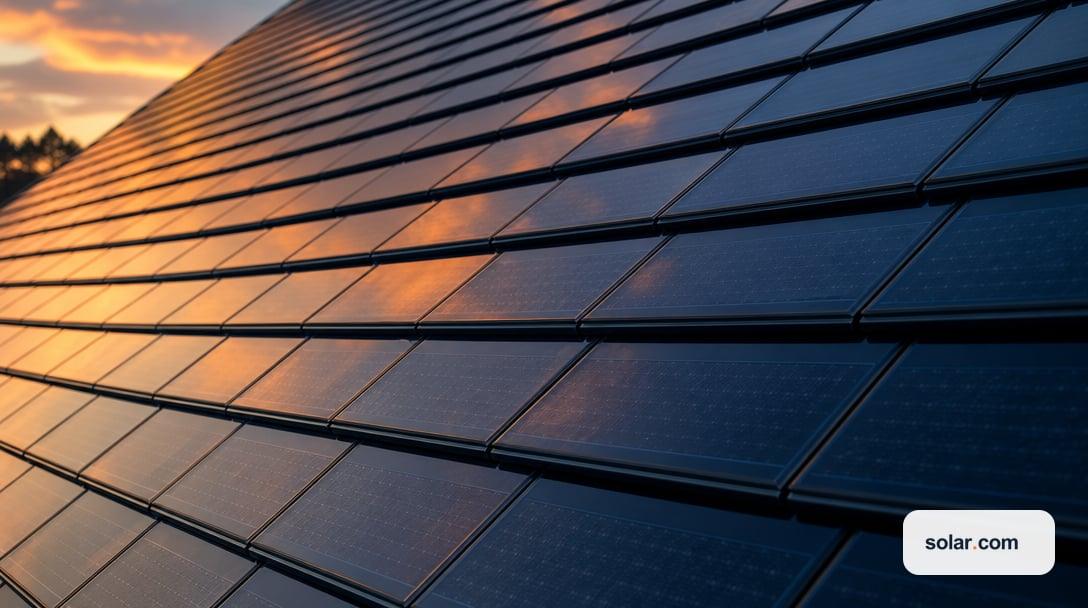
Almost exactly 10 years after Elon Musk introduced the world to Tesla’s solar roof on the set of ABC’s “Desperate Housewives,” Tesla has quietly retired the product, announcing that it will no longer be selling or installing solar roof tiles.
What was the solar roof?
Tesla’s solar roof tiles were an integrated roof and solar product. This had two distinct, theoretical advantages over traditional solar panels.
The first is that the solar roof was absolutely stunning. Unlike traditional residential solar installations, which have rectangular solar panels set slightly above the roof surface on aluminum rails, the Tesla solar roof looked like futuristic rooftop shingles. Tesla created active and passive solar roof tiles so the areas of the roof that were optimal for solar collection would contain active panels and those under shade or on the north side of the roof (in the northern hemisphere) would contain passive tiles.
The other advantage was that, unlike traditional rooftop solar, since the solar roof acted in place of a traditional roofing shingle, the entire system was eligible for the 30% solar tax credit (while it existed). So, for a homeowner who needed a roof replacement and wanted to go solar, the tax credit on the entire investment more or less offset the incremental premium of the solar roof. At least in theory. The challenge is that reality was more vexing than the idea of the solar roof, which is why the total number of installations fell far short of the goals Elon laid out when he first introduced the solar roof to the world as he was trying to convince shareholders to approve the acquisition of the predecessor company SolarCity, into Tesla.
The Reality of the Solar Roof
Unfortunately, the solar roof suffered its fair share of challenges. Its beautiful design and integrated roof element meant it took almost 5x longer to install than a traditional rooftop solar array. So installers had to price a significant premium to install one, driving up the costs. As traditional rooftop solar continued to decrease in cost, the solar roof climbed in cost; turning off potential customers. And with the homeowner tax credit ending (with some ironic degree of assistance by Elon himself), the economic value of bundling a roof with solar disappeared.
Next, Tesla’s solar roof tiles suffered from the same technical challenges that bedeviled other integrated roofing products. All silicon-based solar panels are essentially giant semiconductors, of which heat is the enemy. Traditional rooftop solar is usually set above the roof with several inches between the roof substrate and the back of the solar panel to allow for heat dissipation and airflow, to keep the solar panel somewhat cooler. An integrated solar roof tile has no way for that heat to efficiently dissipate, making it inefficient on hot, sunny days, ideally when you’d like to be producing the most solar energy possible.
Ready to see your numbers?
See your real solar price in 90 seconds
Enter your address — we'll show you the system, savings, and price for your exact roof.
What’s Next for Tesla’s Solar Program
Tesla discontinuing its solar roof tiles doesn’t mean it’s abandoning its solar aspirations. Elon’s companies are about to commence construction on a massive solar manufacturing facility in Texas, but these products will be more traditional heterojunction architecture (similar to REC’s). So why is Tesla making a massive investment in solar while retiring a product? Different applications. Elon’s new solar factory is to serve both large-scale terrestrial power generation goals as well as space power generation for data centers.
The good news is that homeowners who were fascinated by the idea of the solar roof, but who didn’t understand the reality of the technical challenges and difficult economics, can now go solar in the most economical and straightforward way: traditional rooftop panels. And while the federal tax credit ended for homeowners who buy their system, that value hasn’t disappeared entirely. With third-party-owned options like solar leases and prepaid lease plans, the third-party owner claims the credit and passes it through as a lower price upfront.
Your next step
See exactly what solar costs on your roof
We use satellite data and your utility rates to show your price and payback in about 90 seconds, with no sales calls.