Socket Full of Sunshine Act: What the New Federal Plug-In Solar Bill Would Do
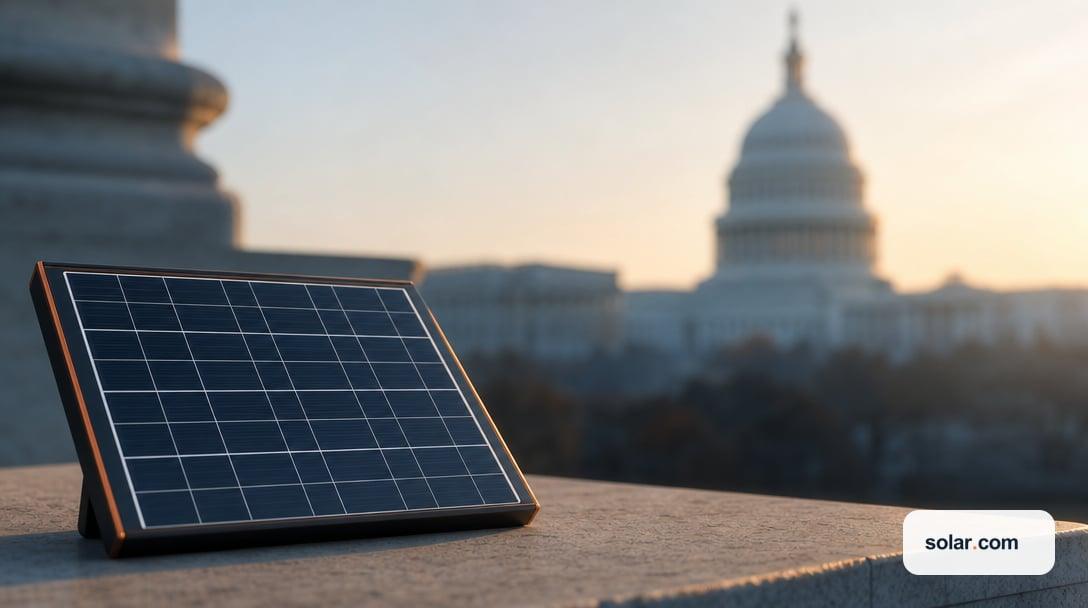
Plug-in solar just got its first national bill. On October 19, 2026, Rep. Rob Menendez of New Jersey introduced the Socket Full of Sunshine Act (H.R. 10851) in the U.S. House.
The bill would offer rebates of up to $1,000 to lower-income households, protect renters’ right to use plug-in kits, and push every state to rethink the rules that make plug-in solar hard to buy and use.
Here’s what it would do, what has to happen before it becomes law, and who stands to save the most.
What is plug-in solar?
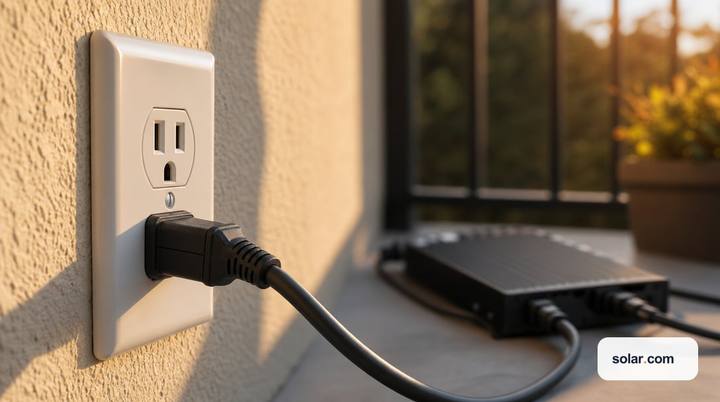
Plug-in solar (also called balcony solar) is a small solar system you set up yourself. A kit usually has one to four panels, a small inverter, and a cord that plugs into a regular wall outlet (yes, electricity can flow both ways through a standard outlet!).
No roof work, no electrician, and, in states with plug-in solar legislation, far less utility and permitting red tape than a traditional rooftop solar installation.
Plug-in solar kits are meant to power the “always-on” devices in your home so you buy less from your utility. An 800-watt kit typically saves about $100 to $450 a year, depending on where you live and what you pay for power. Unlike rooftop solar, plug-in solar is not meant to overproduce electricity for you to sell to the grid or provide backup power during power outages.
The rules change from state to state. About 10 states have passed plug-in solar laws, including Utah, California and New Jersey. In many other places, utilities treat a small kit like a full rooftop system, with the same paperwork and fees.
What would the Socket Full of Sunshine Act do?
The bill does five main things:
- Pushes states to cut red tape. Every state utility commission would have to formally consider letting you use a kit without an interconnection agreement, utility approval, fees, insurance, or extra equipment. “Consider” is the key word: states must review the idea, but they don’t have to say yes. States that already passed a plug-in law, or voted on one in the last three years, are skipped.
- Sets one clear definition. A qualifying kit makes up to 1,200 watts, plugs into a standard 120-volt outlet, meets the National Electrical Code, and is certified by UL or a similar lab. Kits of 400 watts or more need a built-in power control system. That lines up with most state laws.
- Creates rebates of up to $1,000. The Department of Energy would get $100 million a year from 2027 through 2032 to fund state rebates for low- and moderate-income households. The discount comes at checkout, with priority for renters, apartment dwellers, and communities with high energy costs. One catch: the kit must be made in the U.S., with more than 55% of its parts made here. It’s not yet clear how many kits sold today would qualify.
- Protects renters. To get rebate money, a state must stop landlords from banning plug-in solar for tenants who pay their own electric bill, including on balconies and patios. Landlords could still set reasonable limits on size and placement.
- Adds safety rules and a savings label. The Consumer Product Safety Commission would write a national safety standard, and kits would come with info on safe setup, warranties, and expected savings. The FTC would also create an optional savings label, like the yellow EnergyGuide sticker on a refrigerator.
Ready to see your numbers?
See your real solar price in 90 seconds
Enter your address — we'll show you the system, savings, and price for your exact roof.
What has to happen before it becomes law?
Right now, this is only a proposal. To become law, it has to clear four steps:
- The House Energy and Commerce Committee reviews it and votes it forward.
- The full House passes it.
- The Senate passes the same version. There’s no Senate bill yet.
- The President signs it.
Timing is tight. Congress returns from its election break in mid-November, leaving only a few weeks before this session ends on January 3, 2027. Bills that don’t pass by then expire and have to be reintroduced. So think of this bill as a starting point for the 2027 debate.
Even if it passes, change won’t be instant. States would have one year to start their review and two years to finish it. Congress would also have to set aside the rebate money in its yearly budget.
Who would this help, and how?
Plug-in solar was built for people the traditional solar market leaves out. This bill leans into that.
- If you rent, you’d gain the most. Your landlord couldn’t ban a kit outright, and renters get first dibs on rebates. When you move, the kit moves with you.
- If money is tight, a $1,000 rebate could cover half or more of an 800-watt kit, which typically costs $1,100 to $2,000. Say a $1,500 kit saves you $250 a year. On its own, it pays for itself in about 6 years. With the rebate, you’d pay $500, and it pays for itself in about 2.
- If your state has no plug-in solar law, your utility commission would have to take a hard look at removing fees and paperwork.
- If you already live in a state with a plug-in law, like California, New Jersey, or Utah, your rules would mostly stay the same. You’d mainly gain the rebate, a national safety standard, and the savings label.
One note: plug-in solar trims your bill, but it won’t erase it. This bill wouldn’t change that. What it would do is make kits cheaper and easier to use for the people who need bill relief most. If it stalls this year, watch for it again in 2027.
Your next step
See exactly what solar costs on your roof
We use satellite data and your utility rates to show your price and payback in about 90 seconds, with no sales calls.