


New York loves its Yankees — and its Sunpower solar panels.
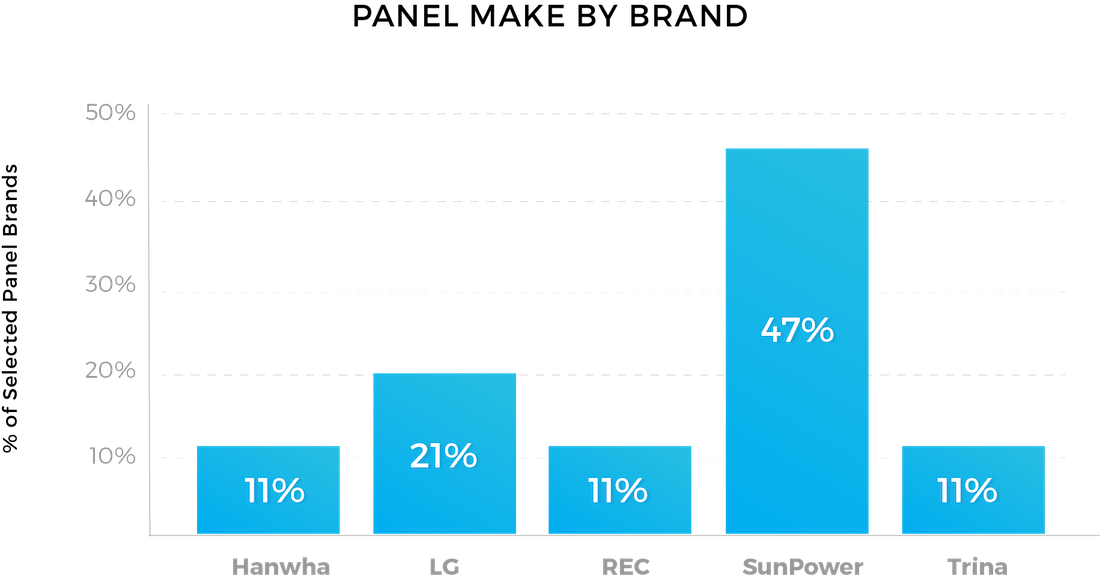
A recent review of the Solar.com platform showed that homeowners in New York state chose SunPower above any other manufacturer by an impressive margin.
SunPower was the panel of choice 47 percent of the time. LG came in second at 21 percent, and Hanwa, REC, and Trina all tied for third at 11 percent.
Why does SunPower come in head and shoulders above its competitors in this market? There are a few factors that may come into play with New York’s choice of solar panels.
Sunpower is a Leader in Efficiency for Solar Panels
Producing high-end solar panels, SunPower has set new records in the lab with 24.1 percent efficiency. That’s in best-case scenario conditions. In real-world conditions, it would more likely be around 20.6 percent, but that’s still impressive considering most panels average between 15 and 18 percent efficiency.
These high-end panels might be so desirable for New Yorkers due to their ability to maximize available sunshine. In California – particularly in Southern California – homeowners have an average of 284 days of golden sunshine per year.
In the Northeastern latitudes like New York, sunny days average around 75 days per year across the state. When it is sunny, it might not be for long. The sun often peeks through rolling clouds, especially in the winter months.
When sunshine isn’t as consistent, it makes sense to put the most efficient panels possible on your roof to capture every bit of potential energy. As a US-based manufacturer, SunPower also happens to be one of the greenest solar panel options available.
Lack of Roof Space Requires Fewer, More Efficient Panels
Another incentive for New York solar customers to choose SunPower could be the lack of roof space. In the Midwest and Western states, there tends to be more room to expand cities and build large homes with ample roof space.
Many households in the East have been there for a long time and may have been built when homes were smaller. Even if they are new homes, there is generally less room to build and grow in more historical cities.
When there’s not as much room for panels, it’s generally a good idea to use the most efficient panels possible to “maximize” your roof space. You can fill the entire roof with efficient panels and you’re more likely to offset household energy use, even with limited space up top.
New York Incentives Could Entice Buyers to Invest More
Another possibility is that, because solar incentives in New York are higher than any other place in the country, homeowners are willing to pay extra.
For starters, energy is expensive in New York state, averaging about 17.62 cents per kWh. That’s 48 percent more than in most of the U.S. New York City itself is even higher at 19.8 cents per kWh. This alone could inspire homeowners to find alternative utility rates. The dent in energy bills you’d see from high-quality panels delivering more power to your home would be well worth it.
On top of that, New York has some of the most substantial solar rebates and incentives in the country. Homeowners are eligible for a 25 percent income tax credit off the solar system cost. Certain types of solar energy also qualify as exempt from sales tax, and residences in some areas are eligible for exemption from property tax.
When you invest in high-efficiency SunPower panels, you’re more likely to recoup much of the initial cost with these incentives. New York has ambitious renewable energy goals, and solar is a big part of that.
Whether you live in New York or elsewhere, here’s a helpful post on things to consider for a solar project due diligence. Of course, don’t hesitate to run any questions about SunPower or anything solar by one of our energy advisors.


