


What Is a Solar Lease Escalator? What Homeowners Need to Know
Homeowners evaluating solar proposals will likely be confronted with options that include an escalator. This article will help you unpack solar lease escalators and understand whether this option is a good fit for your home.
What is a Solar Lease Escalator?
An escalator is the industry term for an annual increase to your solar payments. Just like your utility likely increases the price you pay for electricity each year, some solar leases and Power Purchase Agreements (PPAs) have an escalator clause that signals a slight increase in your solar payments each year, typically by 1-3% per year.
For instance, if your solar lease has a starting payment of $100/month and an escalator of 1.99% per year, your monthly bill will increase to $101.99/month on the anniversary of your system turning on. That payment will increase by another 1.99% the following year, and each year for the duration of the lease.
Here’s what the first 10 years of payments look like in this scenario:
| Lease Year | Monthly Payment |
| Year 1 | $100.00 |
| Year 2 | $101.99 |
| Year 3 | $104.02 |
| Year 4 | $106.09 |
| Year 5 | $108.20 |
| Year 6 | $110.35 |
| Year 7 | $112.55 |
| Year 8 | $114.79 |
| Year 9 | $117.07 |
| Year 10 | $119.40 |
Common escalators are 0.99%, 1.99% and 2.99%. Higher escalators allow for lower payments in Year 1, while lower escalators require slightly higher monthly payments in Year 1. The right cost escalator for your solar depends on your savings goals. Are you looking for the greatest immediate savings or playing the long game to save more over time?
Why do some solar lease options involve a rate escalator?
Rate escalators are a tool that can make solar leases beneficial to homeowners and the investors who own the system. For homeowners, an escalating lease allows for a lower starting payment and more savings in Year 1 than a non-escalating lease. Likewise, the investors who own the system for its assumed 25-year life can still cover operating costs and meet their returns by offering an attractive starting payment and slowly increasing it by the agreed-upon rate.
Solar lease escalators vs utility rates
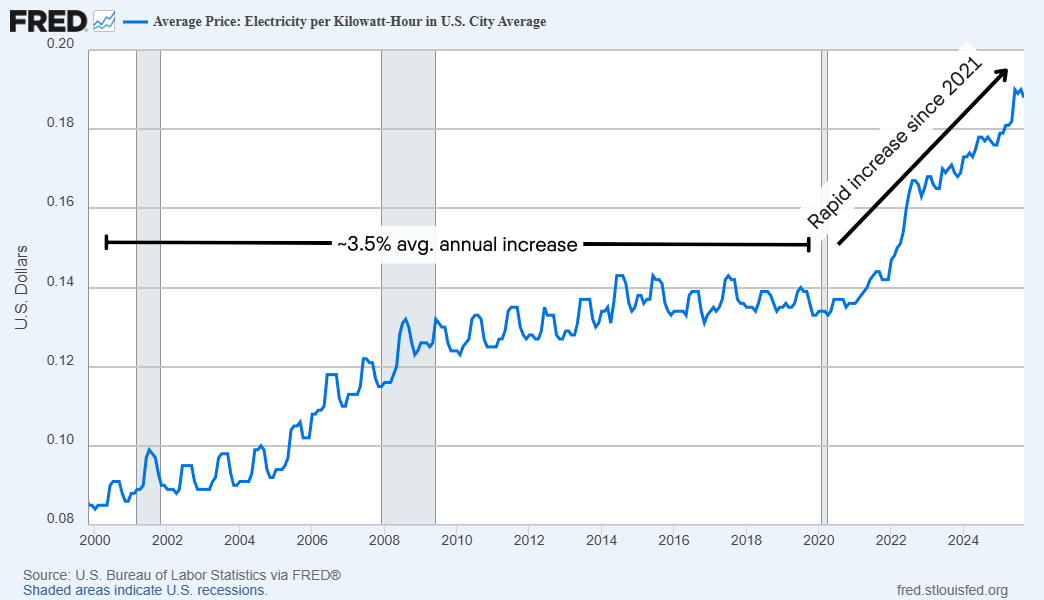
Even with an escalating lease, it’s a safe bet that your solar savings will continue to increase over time. Typically, leases don’t exceed 3% escalators while the average annual utility rate increases by 3.5% per year. Since 2021, with the influx of data centers, EVs, extreme weather, and other strains on the electrical grid, rates in many parts of the country are increasing far more than 3.5% per year.
In fact, in 2025 alone, the average residential electricity rate in the U.S. increased by 7.4%!
Simply put, an escalator is a way for you to realize the highest Year 1 savings. It’s not uncommon to see monthly savings increase by $10 or more when a solar proposal has a rate escalator, depending on system sizes and installation costs.
Related reading: Lease to Own Solar Panels: How Does It Work?
Escalator or No Escalator? Solar.com’s Recommendation
The solar.com team will always offer the lowest escalator lease available. For projects with favorable economics, this can mean a 0% escalator or a very modest 0.99%. There are, however, locations where this isn’t possible due to the economic constraints of a project, and you may be presented 1.99% or 2.99% escalator.
Why do we recommend a low escalator? Even though it might mean less savings in Year 1, fixing your lease payment means those savings will increase at a greater rate as your utility continues to increase the cost of providing you with electricity. The reality is no one knows what utility rates will do in 5, 10, or 20 years. Offering a low or no-escalator proposal is the best way to hedge against energy inflation and ensure your project enables maximum savings.
Questions to Ask when Presented with an Escalating Lease Proposal
Solar.com prides itself on enabling choice, transparency, and trust, which means our team will point out when proposals have an escalator clause and how that might influence system economics and your decision-making.
Our hope is that every other solar company also provides you with similar insights and transparency when offering lease proposals. If not, here are three questions to ask while you are reviewing a solar lease proposal:
- “What is the annual escalator percentage, and how will it affect my monthly payment over time?”
- “How does the escalator impact my total savings compared to a 0% escalator option?”
- “What happens if utility rates don’t rise as fast as the escalator?”
This third question causes some homeowners to second-guess leasing solar. We’ll take a closer look below.
What if my solar lease escalator outpaces my utility rate?
Most solar leases and PPAs have a clause that prevents the cost of solar from increasing above the rate of retail electricity. So, if your utility caps or even lowers the cost to provide you with electricity, your solar payment will never “cross the line” of being more expensive than the utility.
With that said, it’s important to review your solar agreement and escalator clause carefully, as there are lots of nuances and complications with this (e.g., the utility can lower the cost of power but increase fixed charges).
The bottom line
Rate escalators are often seen as the Achilles heel of solar leases and PPAs. In reality, it’s a tool that enables homeowners to find the right starting payment for their situation and lock in predictable electricity costs.
Connect with a solar.com Energy Advisor to see your options and dial in a solar solution that meets your savings goals.


