Page 139 | Solar.com

Please enter a valid zip code.

Perovskite and Silicon Solar Cell Efficiency Reaches 25.2%

By Solar Panel Efficiency - Pick the Most Efficient Solar Panels No Comments

While around 90% of solar panels currently on the market are made out of silicon, adding a new material may soon make existing module design even more efficient.

Perovskites are a cheap class of materials that can easily be combined with silicon for more efficient electricity generation. Perovskite cells have come a long way since 2009 when they boasted an efficiency of just 3.8% for a few minutes. The most advanced perovskite cells “now boast an efficiency of 22.7% and routinely work for thousands of hours under harsh test conditions,” according to recently published research.

The most recent breakthrough stems from a new method of combining the silicon-based and perovskite cells. Silicon-based cells have a surface made up of microscopic pyramids, which has historically made placing a homogeneous perovskite sheet on top difficult.

According to Swiss Researcher Florent Sahli, “Until now, the standard approach for making a perovskite/silicon tandem cell was to level off the pyramids of the silicon cell, which decreased its optical properties and therefore its performance, before depositing the perovskite cell on top of it. It also added steps to the manufacturing process.”

Sahli and his team’s new process uses evaporation technology to create an inorganic substance that surrounds the pyramids and allows for easier placement of the perovskite layer. While the technology is not yet commercially available, it is currently undergoing tests to increase efficiency as well as the long-term stability of the perovskite film.

Perovskite and Silicon Tandem Cells: A Perfect Pairing

Like silicon solar cells, modules made solely out of perovskite are possible. However, researchers have begun focusing on “tandem solar cells,” which feature a thin layer of perovskite cells – about one micrometer thick – on top of a layer of silicon-based cells.

While silicon is best at converting red and infrared light into electricity, perovskite is more efficient with green and blue lights. The resulting combination recently reached a record efficiency of 25.2%. However, researchers believe that efficiencies beyond 30% are possible in the near future. 

Perovskite-Silicon Tandem Cell

(Pictured: Tandem Cell Model from source)

This new research comes at a critical moment for technology in the solar industry. Advancements are continuously being made to boost efficiency and reduce prices, but many believe that silicon solar cell technology is starting to flatline after decades of success.

While challenging, the widely recognized theoretical maximum efficiency for silicon-based solar cells is 29.4%. As researchers draw nearer to this limit, tandem solar cells offer the realistic possibility of exceeding this cap. According to the Swiss research team, integrating perovskite cells on top of silicon-based cells “would only add a few extra steps to the current silicon-cell production process, and the cost would be reasonable.”

Better yet, the materials needed to create perovskite cells are relatively abundant. Tandem solar cells and their potential hold certainly offer a lot to get excited about!

Should you wait for tandem cells to go solar?

Although the potential for perovskite-silicon cells are great, consider going solar soon to maximize your savings on your electricity costs. It will likely still be a few years before tandem cells are commercially available at a wide scale.

What’s more, unless you have extremely limited roof space to place solar panels, the efficiency of standard solar panels are already at a high enough level to cost-effectively install an array.

To learn more about your home on solar, use our calculator to get an instant snapshot of what solar would look like for your home.

What Direction Should My Solar Panels Face?

By Solar Panel Installation Process No Comments


When you make the decision to install a solar panel system at your home, there are going to be several questions on your mind. How large should your system be, how much is it going to cost, what company you should buy your panels from, and importantly, can your roof support a solar panel system in the first place?

Although almost every roof type can physically support the installation of solar panels, not every roof is large enough, exposed to enough sunlight, or facing the right direction to make it economically practical.

During the early stages of your solar project, these details are looked at and used to determine the way in which your solar panel system should be oriented and the direction that they should face.

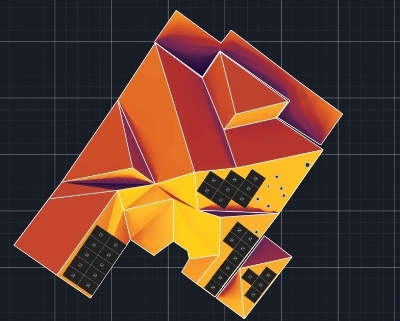
The direction that your solar panels face is fundamental to how much energy they can produce and how much money you can save over time. You might be thinking that the direction your panels should face is obvious and should simply be towards the direction where they will be exposed to sunlight for the most amount of the day, but the answer is not that simple.

In this post, we will explore this question further so you can go into your solar project with as much knowledge as possible.

Randy+Irradiance+Map

Net Energy Metering and Time of Use

The direction that your solar panels face is ultimately dependent on whether or not your system is connected through net energy metering (NEM) and under a time of use (TOU) payment structure. Since the majority of solar panel owners keep their system on the grid, we can split this grouping into simply those who pay for energy based on a TOU payment structure and those who do not.

First off, NEM is a system where the solar panel owner is awarded energy credits for any excess electricity that their system produces. These credits can be used to purchase energy in the future to help you save significantly on your electric bill.

The TOU payment structure is fairly common across the country, and especially prevalent in California with its new NEM 2.0 model. TOU has consumers pay more per kWh of electricity use at peak hours than at off hours. Peak hours may differ for each utility company, but they always correlate to when the majority of consumers are using the most electricity, or when costs to the utility are the most to produce electricity. This is usually in the early afternoon to evening when most people are returning home from work.

So, why is all of this important for the direction that your solar panels face?

Face Panels West for TOU Ratepayers

For solar panel owners that are under a TOU payment system, the best way to save money on your electric bill is to produce more energy during peak hours than during off hours. This means that your solar panels will be put in a unique direction specifically to maximize energy production between this time range. To do this, you should point your solar panel west.

When you point your solar panels west, you are not maximizing the total amount of energy that is produced. What you are doing is optimizing your energy production for maximum savings with your utility company.

Face Panels South for Non-TOU Ratepayers

For those who are not part of a TOU model with their utility company, the direction that you want to face your solar panels is south. This is so that you can expose your solar panels to as much light as possible to optimize their energy production.

Without a TOU structure, consumers do not need to focus on maximizing their energy production at a set time of the day. Therefore, their goal is to produce as much energy as they can throughout the day.

Be Sure to Speak with a Solar Expert

Every home is unique, and it’s best to speak with an expert in solar to understand where solar panels should be placed on your roof.

Outside of TOU, the biggest factors that influence the direction of your solar panels are shading and other obstructions that impact the panel’s exposure to light. The environment that your solar panel system is installed in will be the biggest factor behind whether or not you are on TOU.

Get Started Today!

Now that you know what direction your solar panels should face, you can really start to imagine what a solar panel system can look like on your home.

These details, among several others, are crucial to the installation of your system. Get started today and go over everything with one of our experienced energy advisors!