


If you have ever driven through a residential neighborhood in states like California, Arizona, North Carolina, or any of the other top states for solar, it is likely that you have seen the stereotypical blue solar panels covering some of the rooftops. Blue solar panels are very common for several reasons, but they are not the only color that a solar panel may come in.
The color of a solar panel is largely based on the way in which the solar module is manufactured.
Monocrystalline and polycrystalline solar panels are the two main forms of consumer solar panels and vary in color from either blue or black. Both of these types of solar panels use silicon as the conductive material, but the way the silicon is treated and molded into the solar cell is quite different.
Check out this video to find out the difference between mono and poly crystalline solar panels.
In this post, we will take a look at each type of panel and see why they take on the color they do.
Polycrystalline Solar Panels
Polycrystalline solar panels are the more common, blue colored solar panels that have been widely popular for over a decade in the solar market. Polycrystalline solar panels are manufactured through a process where silicon is melted and poured into a mold. This leads to a solar cell that is made up of several silicon fragments.
The name of these panels comes from the fact that they include many (‘poly’) silicon crystals, whereas monocrystalline panels only include one (‘mono’) silicon crystal in each cell. The reason why this form of the solar panel is much more popular than monocrystalline panels is that they are cheaper to manufacture.
One drawback of the polycrystalline solar panel, however, is that is less efficient. This is a result of the solar cell being packed with numerous silicon crystals, which limits the space available for photons to travel through.
The blue color of a polycrystalline solar panel is a side-effect of both the way the silicon crystals reflect light, as well as from the anti-reflective coating that the panels are treated with.
Monocrystalline Solar Panels
As was touched upon earlier, monocrystalline solar panels make use of one silicon crystal within each solar cell in the panel. The manufacturing process for monocrystalline panels requires more work, and as a result, it is more expensive to produce these units.
The production of monocrystalline solar cells involves the Czochralski process, which in this case is a method used for growing single silicon crystals. This is accomplished by slowly lifting a silicon seed crystal out of a dish of melted silicon. As you lift it out, it slowly forms one larger crystal. These are then cut into squares which are used in the monocrystalline panel as a solar cell.
Monocrystalline panels are black as opposed to blue and are more efficient for a couple of reasons. First, the black is a color that naturally absorbs more light than blue, and secondly, there is more space for the photons to travel through with one silicon crystal in each cell.
Sistine Solar Skins
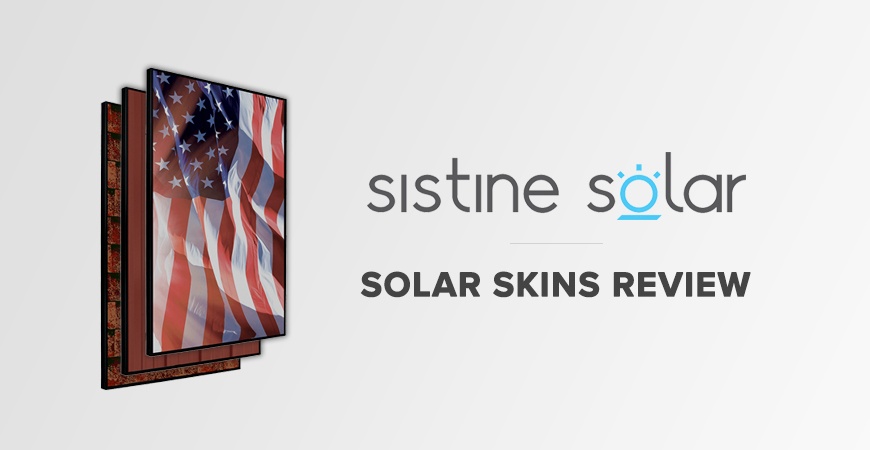 Sistine solar skins are a relatively new technology coming out of an MIT startup. Their patent-pending technology allows you to change to look of your solar panels to anything you want. These solar skins do not fundamentally change the color of your solar panels, but they do offer a solution for consumers that are looking for something outside of the traditional blue or black color.
This is actually a much bigger issue than one would assume, considering the Department of Energy estimates that there are 13 million homes across the country that decide not to adopt solar because of the appearance of the panels. Solar skins are a great way to address this problem.
Blue Beginnings
It is true that the majority of solar panels you will see around the country are blue in color, which is a result of their cheaper price and wider availability, but there are also other options if blue is not your thing. With black monocrystalline panels, solar skins, and even solutions like Tesla’s solar roof, there will soon be an option for everyone.
If you are looking to get started on your solar project, you can connect with one of our experienced Energy Advisors today!


