Page 147 | Solar.com

Please enter a valid zip code.

What Solar Options Are There Besides Rooftop Solar?

By Solar Panel Installation Process No Comments


When you think of solar, you probably imagine a solar panel-lined rooftop. For many homeowners, rooftop solar is usually the way to go. But it isn’t practical for every home or situation.

There are times you might need to look into other options besides rooftop solar. In some cases, you could even see more energy production from alternative solar options.

Here are a few of those other solar options for you.

When and Why You Might Not Be Able to Use Rooftop

Rooftop solar systems are common because they make sense in many ways. Aesthetically, solar panels on the rooftop can be out of sight. They also don’t take up space you would normally use (when was the last time you spent time on your roof?).

Installing a rooftop solar array is a fairly common and quick practice these days as well.

You might have to look into other solar options if you have:

  • Limited roof space
  • Too much shading from trees or nearby structures
  • An older roof that you’re not interested in updating at the moment

Other Solar Options and Their Advantages

Ground-Mounted solar is an excellent option if you find yourself in a situation where a rooftop doesn’t make sense.

There are a couple of variations for ground-mounted solar. One option is a standard ground mount, where solar panels are secured to a stationary metal frame close to the ground. The other is pole mounting, which often incorporates solar tracking.

These are both great choices with the following advantages:

  • Optimal positioning towards the south (or even following the sun)
  • No space limitations, which means as many panels (and as much power) as you want
  • Easily avoid shading by picking an optimal location
  • No roof upgrade needed

If you own a lot of lands, it might be worth looking into ground solar anyway. You have more control over positioning your panels or even purchasing a tracking system. These moveable ground mounts follow the sun’s position in the sky, which can significantly increase how much power your panels produce.

Better energy production means more energy savings sooner.

Of course, you’ll need to compare these benefits with the added cost of ground mounts. These systems require more hardware and labor, including trenching from the system to your inverter and panel box. Our Energy Advisors can help you easily compare the pros and cons of rooftop versus ground mounted solar.

Other Reasons and Options for Solar Alternatives

Another big reason you might look into solar arrays besides rooftop might be that you live in a condo or other shared building. Rooftop solar can be more difficult to install in these situations, particularly if you live in a community with HOA restrictions.

California recently passed a law making it easier for condo owners to go solar, even if they live in an HOA community. If you live outside of California or if you rent, community solar might work for you.
Community Solar

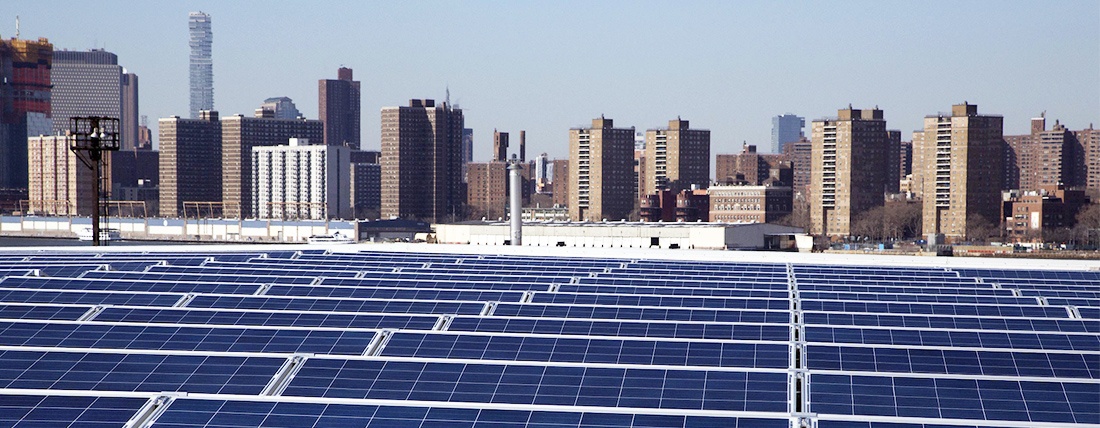
With community solar, a group of people who might not be able to go solar on their own can fund a shared solar project. Ask your neighbors if they’d be interested in a community solar project. They probably like the idea of saving money on their electricity bills, too. Your utility company might even be developing community solar systems you can opt into,

Don’t be discouraged by thinking a roof with a skylight or too many chimneys will keep you from getting solar. There are plenty of options. And they might even work out better for you!

Brand Battle: Hyundai vs. Panasonic Solar Panels

By Solar Panel Installation Process No Comments

Hyundai and Panasonic are trusted brands and they’ve both expanded into the solar panel industry. Offering quality products for two different price points, each brand has its pros and cons.

They’re also both top solar brands on Solar.com. Let’s explore the differences here, analyzing both brands against the most important industry specs:

  • Efficiency and Nominal Power
  • Degradation
  • Temperature Coefficient
  • Warranties and Bankability
  • Cost

Solar Panel Efficiency and Nominal Power

Efficiency tells you how well your solar panels convert solar energy into electricity. The higher your solar panel efficiency, the more electricity you’ll get from the panel on average.

The more efficient a panel is, the fewer panels you’ll need on your roof. This makes high-efficiency panels especially desirable for smaller rooftops. On the other hand, if roof space isn’t an issue, you could get more low-efficiency (and most likely lower-cost) panels for a similar result.

  • Hyundai’s solar panel efficiency range is between 14.2 percent to 18.4 percent
  • Panasonic’s efficiency ranges from 19 percent to 21.6 percent

Nominal power represents the maximum power output under normal conditions. Your panel’s output capacity is another major factor in determining how many solar panels you’ll need to cover your monthly energy consumption.

  • Hyundai nominal power ranges are between 275 Watts and 300 Watts
  • Panasonic falls between 315 Watts and 330 Watts.

So far, Panasonic offers more efficient and more powerful solar panels than Hyundai.

Degradation

The second law of thermodynamics states that all things go from order to disorder. Or more plainly, stuff wears out over time.

So it goes with solar panels. Over their lifetimes, solar panels don’t produce as much electricity as they used to. Both companies offer a 25-year performance warranty on how much energy these panels will produce over time.

Here, Panasonic is offering a higher percentage of power over the same time period. Both guarantees are good.

Temperature Coefficient of Hyundai vs. Panasonic Solar Panels

Your solar panels operate best in cooler temperatures. The ideal temperature for solar panels is 77 degrees F (25 degrees C).

For every degree above that, your temperature coefficient determines how well your panels produce in warmer weather. The lower a panel temperature coefficient, the better.

  • Hyundai’s temperature coefficient range is between -0.45 and -0.41
  • Panasonic’s is between -0.3 to -0.29

Here again, Panasonic has the slight edge. Panasonic’s HIT panels are especially powerful electricity producers with some of the lowest temperature coefficients in the industry.

Equipment Warranties and Bankability

  • Hyundai offers 5 to 10-year equipment warranties
  • Panasonic offers 25-year equipment warranties

Obviously, Panasonic offers the better warranty here, protecting you against any product defects for longer.

Bankability is the capability of a company to back up those warranties in the future. A promise to replace any faulty equipment is worthless if a company goes out of business in year 18 of your 25-year warranty.

Panasonic has been in business since 1918 and has been producing solar panels for the last 40 years – one of the earliest entrants into the industry. Hyundai was established in 1972 and has been producing solar panels for 13 years.

Both companies are well established and very profitable. Their diverse product offerings make them both stable and bankable. Learn more about evaluating solar companies in this post.

Cost of Hyundai vs. Panasonic Solar Panels

Panasonic offers top-tier solar panels priced between $3.37 and $3.86 per watt.

Hyundai solar panels currently price between $2.83 – $3.10 per watt, which is on the lower end of industry averages. This makes Hyundai a great option for cost-conscious solar projects.

Of course, prices will vary significantly based on where you are located and what providers near you have on supply. If you’re looking to get detailed offers from multiple solar providers near you, check out our online solar marketplace.

Which Solar Panel Is Better?

One solar panel brand might suit your solar project, while the other might be better for your next door neighbor. Panasonic and Hyundai are Fortune 500 companies producing quality products backed by warranties.

Both panels are viable options. Which you choose simply depends on your goal!

On the Solar.com platform, we saw more people choose Hyundai than Panasonic in 2017. This may be because Hyundai offers a quality product at a more affordable price, even if the efficiencies and warranties don’t match up with Panasonic.

An energy advisor can help you figure out which panels might be a better choice for your solar project. Give them a call at 888.454.9979 or explore instant estimates for solar for your home here.