Page 150 | Solar.com

Please enter a valid zip code.

California SGIP Home Battery Incentive Tiers Fill and Rebates Drop

By Solar Incentives by State No Comments


California was a dark place (sometimes) in 2000 and 2001. The sunny state was experiencing power blackouts due to demand overload on the grid.

The Self Generation Incentive Program (SGIP) was introduced to encourage more distributed power sources and storage, for a more resilient grid.

Essentially, we needed to take a load off the grid — fast. The best way to do this was by incentivizing different means of creating and storing energy in distributed ways.

If you’re looking into a battery for your home and claiming the SGIP rebate, use our platform to obtain multiple quotes from vetted providers. >>

SGIP was the solution. The program has changed a lot since its inception, becoming more inclusive of new technologies such as battery storage.

In 2016, the SGIP allocated 75 percent of the total budget for energy storage, such as a home solar backup battery. This and other revisions have made rebates more available for residential homeowners who were squeezed out by commercial storage customers in earlier versions of the plan.

The rebate structure is set up in five tiers or steps, which descends by $0.05/Wh or $0.10/Wh (depending on demand within the first 10 days of a step’s availability).
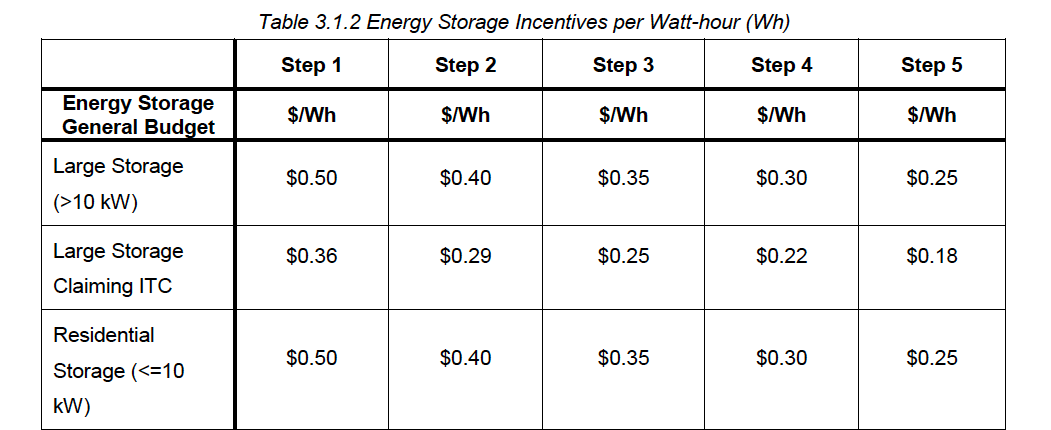
SGIP Per Wh rebatesImage from SGIP Handbook Version 6

SGIP 2018 Status: Rebates are Dropping and Completing

Four utilities offer incentive rates: San Diego Gas and Electric (SDGE), Pacific Gas and Electric (PG&E), Southern California Electric (SCE), and Southern California Gas (SCG).

The SGIP is one of the longest-running self-generation programs in the country and is hugely successful. In fact, SDGE is already in step 5 (the final phase of the program) due to high demand. When step 1 was released, SDGE sold out of both residential and commercial project budget limits within 24 hours!

As of April 30, 2018, SDGE had to open a waitlist for homeowners applying for home battery installation rebates. This was set up to happen when the program budget was completely allocated, during the final step.

According to the SGIP handbook, when there is enough attrition to fund waitlisted projects, they will be assigned an incentive rate in the last step and reviewed in the order in which they were submitted. People on the waitlist will have their applications funded as money becomes available throughout the rest of the program.

Of the four utilities, the latest update on the program metrics shows:

  • SDGE is in step 5 at $0.25/Wh,
  • SCE in step 3 at $0.35/Wh,
  • PG&E in step 3 at $0.35/Wh, and
  • SCG is still in step 2 at $0.40/Wh.

SDGE rates are listed under the Center for Sustainable Energy (CSE), which is the Program Administrator for the program for SDGE.
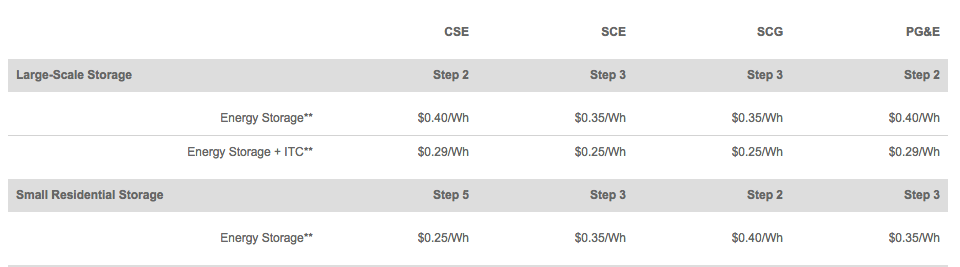
 SGIP Program Metrics You can see the allocation here under Small Residential Storage

Don’t Miss Out on SGIP Rebates

With the remaining utilities edging toward the latter half of the available program funds, taking action on securing these rebates for yourself as soon as possible is a good idea.

If the SDGE program budget trajectory is any indicator of the general trend, the other programs wrapping up sooner than expected is not out of the question.

You can select your utility on this Program Level Budget Summary page through Self Gen CA to see where your utility stands as far as program budget.

How Much You Could Save with SGIP

The amount of money you could save with a battery storage rebate through SGIP varies based on which step of the program is active with your utility provider when you apply and the size of your battery.

Obviously, earlier steps will give you the best incentive rate. For a 13.2kWh Tesla Powerwall 2, ballpark estimates for savings are between $2,900 in step 5 and $4,640 in step 2.

You also might be eligible for the 30 percent federal tax credit or ITC, which would put another significant dent in battery price.

If you think a battery might fit into your home solar energy system, read more about specific requirements and exclusions the IRS looks at for solar batteries and the ITC here.

Should I Get a Solar Thermal System Instead of a PV System?

By Solar Panel Installation Process No Comments


When you hear about installing solar, you’re most likely hearing about PV (photovoltaic) solar cell panels. They’ve become standard in the industry.

PV solar cell panels were developed in the 1950s at Bell Labs to power electronic equipment. They picked up development speed through funding during the space program.

An older form of solar technology called solar thermal has been around since 1896. These two technologies are fascinating and have each moved solar technology forward in their own right. But when it comes to installing solar on your home, does solar thermal make sense?

Here’s a breakdown of the differences between the solar thermal versus PV and which makes more sense for homeowners.

Solar Thermal Generates Heat to Warm Water

The primary use of a solar thermal system is to provide hot water through the use of solar technology.

Similar to a PV solar system, solar thermal systems requires collectors or panels on the rooftop. They absorb solar energy just as PV systems but differ in what happens from there.

Solar Thermal System

Solar thermal systems have a pump circulating solar fluid (water, saline or other fluids) through the collectors and deliver heat to a water storage tank.

When homeowners need hot water, the solar-heated water takes precedence and either eliminates or reduces the energy needed by the boiler to heat water. This is how solar thermal reduces energy bills, as generating heat for water consumes a lot of energy.

Differences Between Solar thermal and PV Solar Panels

  • Solar thermal uses the sun’s energy to generate thermal energy which is used to heat water or other fluids
  • Photovoltaic (PV) systems, generate electricity rather than heat

Solar thermal is currently used more often on large-scale applications where lots of hot water is needed, like a laundromat or a college dorm. It also requires the use of large amounts of water, more equipment including moving parts like pumps and solenoid valves, has a more complex installation process and is more expensive than PV.

Why Homeowners Are More Likely Better Off With PV

Instead of two separate solar arrays competing for the same optimal south-facing roof space, installing solar PV panels and pairing them with an electric water heater is more cost-effective. This will also be more efficient both spatially on the roof and in terms of overall energy usage.

With all the extra moving parts of solar thermal systems, there’s a lot more that can go wrong when installing or maintaining the system over time. The cost of PV solar panels has reduced to far less than solar thermal and there’s practically no maintenance for PV.

While there are integrated solar thermal and PV systems being developed, they’re still essentially more complex than necessary. PV prices are more reasonable now, making it less expensive and less cumbersome to heat water with electricity.

In the early days of solar, one advantage solar thermal had over PV was that it allowed energy storage for intermittent power. With net metering available to most solar customers and battery storage becoming more available, it’s easier to store electricity collected through PV panels and use it later.

For the average homeowner looking to minimize energy costs without adding any extra projects to their plate, PV comes through as the more straightforward and less expensive option.

If you’re looking into solar, here’s a great post on how to conduct due diligence on your solar project. Going into any project with a good understanding of the process will ensure the process goes as smoothly as possible and that you get exactly what you need.

Still, have questions about solar PV versus solar thermal? Contact our energy advisors team or call 888-454-9979.