The first homes to install modern photovoltaics were in the 1960s. These early adopters were pioneers in alternative home energy. They took a risk of installing new technology. Costs were high and paid in cash. Lucky for them, their financial investment paid off. Those sturdy panels are still producing to this day.
Since those first systems were purchased with cash, the industry has grown and evolved. The solar financing industry has grown parallel to the mass adoption of home solar systems. As more people are looking into alternative energy options for their homes, more financial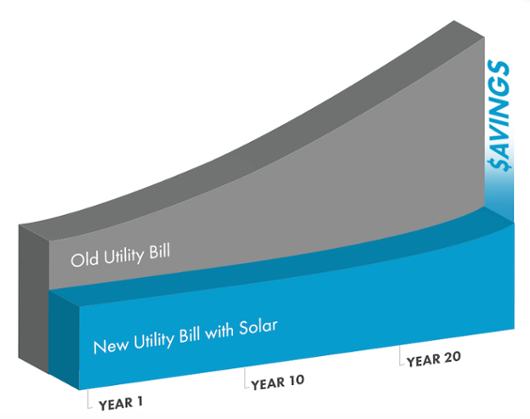 institutions are seeing opportunity.
Over the years, trends in solar financing have come and gone. For the first 5 years of this decade, the prevalence of Leases (also known as Power Purchase Agreements) rose to prominence. The solar installation company owned the solar system and simply sold the power to the homeowner at a lower rate than their current utility. This was a great way to have solar on your home without any initial cash outlay. Additionally, homeowners could see immediate monthly savings making it appealing to many.
However, solar leases are not able to take advantage of the 30% Federal Incentive Tax Credit (ITC). Only those who purchase and own the system can receive that credit. This reality has led to a decline in leases and PPAs over the last two years.
Financial institutions saw an opportunity in this coverage gap – they could finance the purchase of a photovoltaic system entirely, and allow homeowners to take advantage of the Federal ITC. For many solar-minded homeowners, this is the best of both worlds.
In the current solar market, there are many new solar financing options available. There are options for those with low credit scores, those with some cash to put down, those who want to pay off their loan quickly, those who want greater immediate savings, etc.
Here’s a solid foundation for the available solar funding options out there. Check out our comprehensive guide on how to finance solar panel installations.
PACE Solar Loans
In the U.S. today, there is a program called PACE (Property Assessed Clean Energy). It is a government assistance program – which varies state to state – which is aimed at making solar more accessible to lower income or credit challenged households. PACE allows homeowners to use their home as collateral to finance their solar system. 
Note, finance rates are higher for this type of loan. Therefore, it is typically not a good option unless all other routes have been exhausted. If your debt to income ratio is not optimal, a PACE loan might be the right choice to go solar. PACE financing still pencils out for many homeowners with sky-high utility bills.
One main benefit of financing through PACE is that, should the home be sold, the balance of the solar loan transfers to the new homeowner. It is a relatively simple process for both the seller and the buyer.
Examples of PACE programs in California include:
- HERO
- Ygrene
- CaliforniaFIRST
Each of these financiers has very similar loan structures and terms but varies slightly with interest rates and serviceable areas.
For a more traditional loan – where your house is not used as collateral – there are three separate options: re-amortized loans, combo loans, and SREC loans.
Re-amortizing Solar Loans
Re-amortizing loans are independently financed through a financial institution. This loan type allows a homeowner to re-amortize their loan  once. Most homeowners use their tax credit amount to re-amortize the loan at tax season the following year. However, a homeowner does not have to re-amortize with their tax credit. Technically, this loan option can be re-amortized whenever and with any amount of money.
A typical lien is not placed on the home. Home liens can be a problem for some homeowners. Rather, a UCC1 fixture filing is placed on the solar system itself to secure the loan. This is often viewed as a safer, more prudent alternative to a home lien.
Examples of Re-amortizing Loan Financiers:
- Matador
- San Diego Metro Credit Union
Combo Solar Loans
Much like re-amortizing loans, combo loans are independently financed. The main difference is that (in lieu of reamortizing a single loan) there are two separate loans. The first loan is for 70% of the contract price, which has an interest rate (for which the homeowner qualifies). The 
second loan covers the remaining 30% of the contract price. This second loan is meant to equal the federal tax credit amount and typically lasts for 18 months with 0% interest. If this amount is not paid off in that allotted time frame, the balance adopts the same APR as the first loan, whatever that may be.
The main advantage to a combo loan is that the homeowner starts off with a lower monthly payment as compared to a re-amortizing loan. This can be helpful for homeowners where consistent solar loan payments are helpful for budgeting purposes.
Examples of combo loan financiers:
SREC Compatible Loans
For homeowners in a few U.S. states, there is a special program for which they are eligible. When the solar system generates 1 MWh (1,000 kWh), one Solar Renewable Energy Credit (SREC) is created. In each state with the program, these credits can be sold on their state’s open SREC market. They are regionally specific and only available in a handful of states.
SREC Compatible Loans are those that take these credits into account when financing the cost of the system. These financiers offer two options for how SRECs are calculated into the loan offer. The homeowner can choose either a complete upfront buyout for the value of the SRECs (lump sum), or an offer for a ‘fixed monthly product’. In this second option, the financier spreads the value of the solar system’s SRECs over the duration of the loan.
Much like the combo loan option, these options provide the homeowner with a consistent monthly payment that does not change over time. It is helpful for those on a restricted budget or those who strongly prefer consistent payments each month.
Examples of SREC Compatible Financiers:
So, Which Solar Loan Provider is Right For You?
Within each of these loan categories, there are many variations. If you’re interested in pursuing financing for your solar system, our industry experts can help you choose the right one. Solar.com solar.com to connect with our team and schedule a call. We can help you navigate your options to find the right financial fit for your home. We encourage you to call your friendly solar educators at (888) 454-9979 to discuss your options or click here and we will be in touch!


