A common decision you’ll have to make when designing your custom solar system is whether to use microinverters or string inverters.
The basic function of an inverter is to change the Direct Current (DC) power generated by your solar panels to Alternating Current (AC) that can be used to power your home. The type of inverter your choose affects the cost, efficiency, and monitoring ability of your solar system.
In this article, we’ll cover the the basics of string inverters and microinverters to give you a sense of which type is best for your solar system.
Connect with an Energy Advisor to find the right inverter for your solar system.
Microinverter vs string inverter: What’s the difference?
The main difference between microinverters and string (or central) inverters is where and when they convert DC energy to AC energy.
Microinverters are mounted directly on each solar panel and convert the electrical current at the source of creation, whereas a string inverter is mounted on your house and converts the electrical currents from all the solar panels in one central location.
This video goes into further detail about microinverters vs string inverters:
String inverter basics
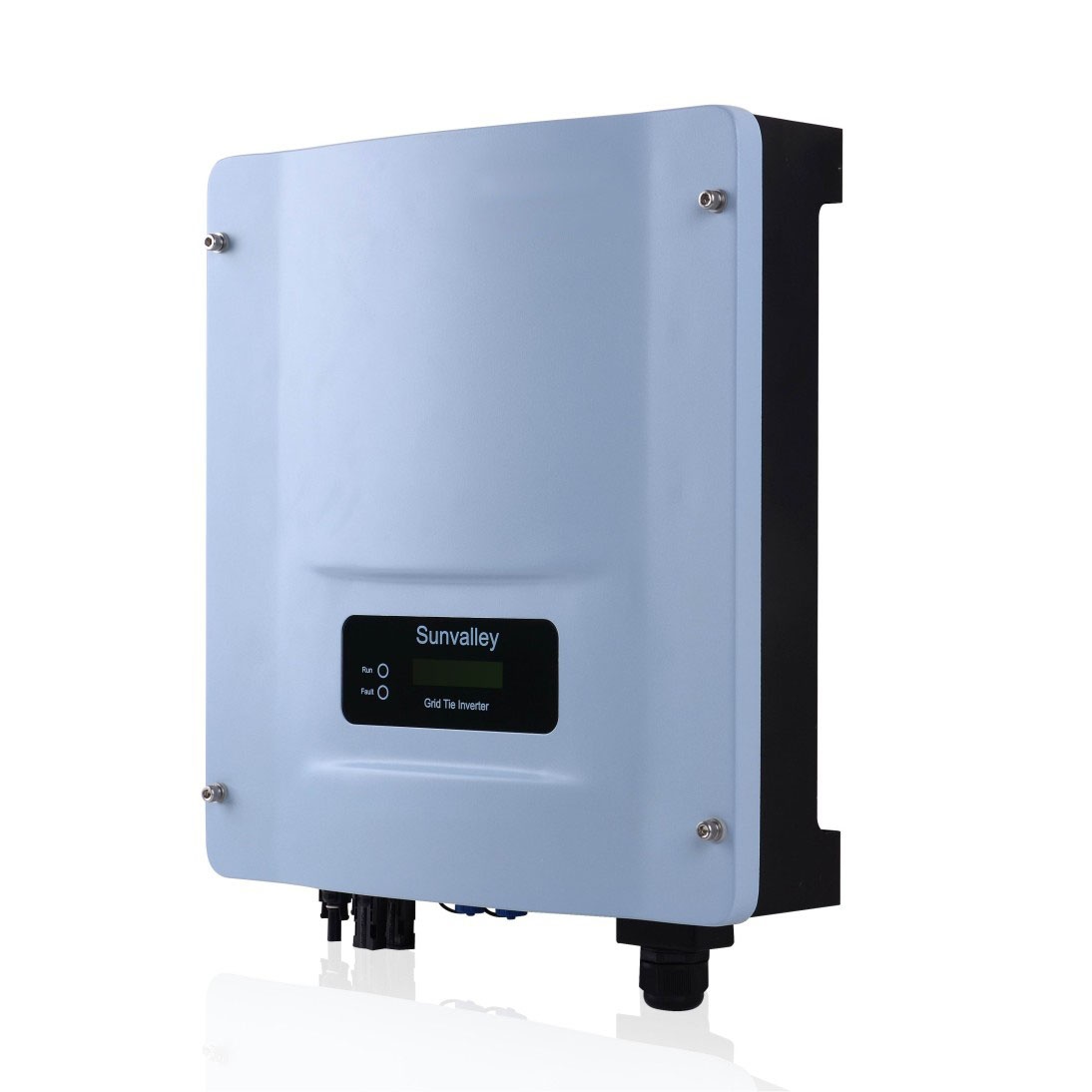
String inverters are the simplest and lowest cost option. When using a string inverter, the solar panels are wired together in a series and connected by a single string to a large inverter installed on your home next to your utility meter. A typical string inverter is around 50 pounds and around 30 inches tall, 20 inches wide, and 8 inches deep — roughly the size of an acoustic guitar (without the neck or the guy at the bonfire playing it).
These types of inverters are best for solar systems that receive full sun and have panels mounted in one large grouping. However, string inverters convert the total energy based on the lowest performing panel so it’s important that all panels are behaving at similar levels to maintain optimum output.
With string inverters, the lowest performing panel dictates the production of the entire system. So if one panel has a branch shading it by 30%, you will only receive 70% of your total system’s possible production.
However, this problem can be solved with optimizers.
String inverter pros and cons
| String inverter pros |
String inverter cons |
| Lower cost |
Lowest performing panel dictates output for the entire array |
| Ideal for roofs with no shading issues |
Not ideal for roofs with any shading issues |
| Can be paired with optimizers |
More expensive to add more panels |
| Easier to diagnose large-scale issues |
Can only track production of entire system |
| Less parts to monitor |
Warranty is typically shorter than for microinverters |
String inverter power optimizers
Optimizers can be attached to each solar panel in a string inverter system to make it work more like a microinverter system.
It’s important to note that optimizer don’t actually convert the electrical current. Rather, they condition the DC power from each solar panel to maintain each panels maximum output, even if one panel is shaded. They also allow you to monitor the performance of each individual panel.
Adding optimizers increases the cost of a string inverter system, but is still typically less than using microinverters. However, the extra cost of optimizers can be recouped by the additional output they unlock for each panel.
Read more about power optimizers here.
Optimizers vs microinverters
So if pairing a string inverter with optimizers costs less than using microinverters, why use microinverters at all?
There are two major advantages to microinverters:
First, there’s the length of warranty. Microinverters are typically warrantied for 25 years — same as solar panels — while string inverters are typically warrantied for 12 years. Since solar is a long-game, many homeowners find it worthwhile to spend a bit more upfront for microinverters with a longer warranty.
Second, if you need to add solar panels because you got an electric vehicle, air conditioner, or electric heat pump, it’s easier and cheaper to add solar panels with microinverters than an additional string inverter with optimizers.
Microinverter basics
Compared to string inverters, microinverters are much smaller and they are mounted on the back of each individual solar panel.
Microinverters convert each panel’s direct current to alternating current at the source of creation. Each microinverter works independently, so if one panel’s output suffers from shading it won’t affect the other panels. Microinverters tend to cost a bit more but are a crucial part of getting the most energy out of systems with unique specifications.
Microinverters have the highest upside when:
- Some or all of your panels are shaded

- If your panels are mounted facing different directions
- You plan on adding panels in the future
Additionally, micro inverters provide the option for additional panels to be added in the future should your needs increase. Supplementary panels are installed and connected with their own micro inverters. In contrast, if you have a traditional string inverter, enlarging your system means adding a second inverter. This adds significant expenses and may make adding panels in the future more difficult.
Finally, there are advantages to microinverters when it comes to monitoring your solar system.
Solar system monitoring software uses data collected from the inverter to tell you how your system is performing. While string inverters provide information about your comprehensive solar system production, microinverters tell you how each individual panel is performing. This data can be useful in troubleshooting for maintenance needs.
Microinverter pros and cons
| Microinverter pros |
Microinverter cons |
| Panels work independently and won’t reduce output when one is shaded |
More expensive than string inverters and power optimizers |
| Easier and cheaper to add panels |
More parts to maintain and repair |
| Monitor performance of each individual panel |
|
| Typically warrantied for 25 years |
|
Finding the right inverter for your system
Picking the right inverter can increase your solar system’s performance and maximize your solar savings. There are two main types of inverters to consider: String inverters and microinverters.
The ideal inverter for you depends on the size of your system, sun exposure, and energy goals — not what a pushy salesperson picks for you.
Team up with a solar.com Energy Advisor to create a custom solar system that meets your goals and compare multiple quotes from vetted installers.