Page 212 | Solar.com

Please enter a valid zip code.

Tesla’s Solar Roof Rivals

By Tesla Solar Roof: Everything You Need to Know No Comments

Elon Musk once again shook up the energy industry with the unveiling of solar roofs by Tesla and SolarCity on October 28th. Building Integrated Photovoltaics (BIPV) was swiftly launched into mainstream media and the public’s attention. Tesla’s elegant product transforms every roofing shingle into a mini solar panel. Musk revealed four different types of roofing that will have this technology, saying it would not only be more durable than conventional roofs, but intends for it to be cheaper than installing a normal roof with solar panels mounted over it.

Other than that, however, the details on Tesla’s product remains incredibly vague. Actual numbers on pricing, efficiency, financing, and manufacturing schedule have yet to be revealed. It’s possible that this product is only financially viable for the wealthiest 1% of interested customers.

Musk wasn’t the first person with the idea to integrate solar panels with the roof of a building. Solar roofs similar to Tesla’s are already offered by other companies in the U.S., some having already deployed and installed their products for many years. Here are brief summaries of the largest players in the emerging BIPV market and their successes and failures so far.
 

SolarRoof_Suntegra.png

SunTegra

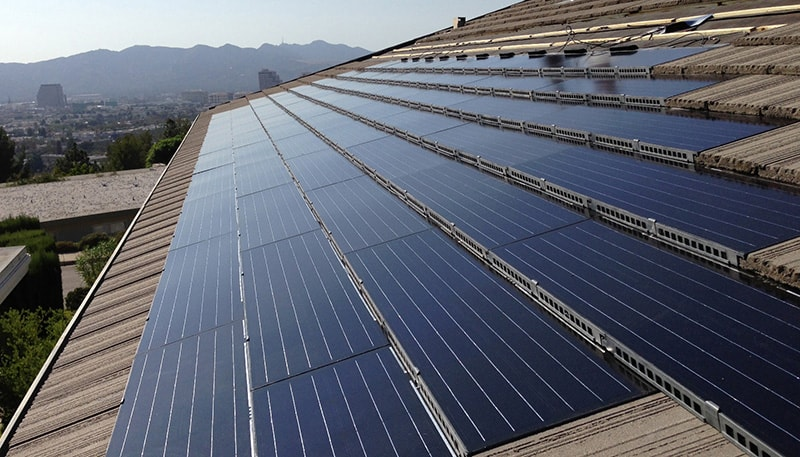
One of the larger players in this industry, New York based company SunTegra offers two different BIPV products, solar roof shingles for low-profile roofs and solar roof tiles for tile roofs. Projects have mainly been on homes in California and New York. The shingle has a 15.1% efficiency and the tile has a 14.5% efficiency, slightly less than average for normal photovoltaic panels.

SolarRoof_AtlantisEnergySystems.png

Atlantis Energy Systems

Like Suntegra, Atlantis Energy Systems currently offers its solar roofing product out of New York and California. Made in New York, their Sunslate product has great aesthetics, with each tile consisting of six 15W 5” mono-crystalline cells for a total power of 90W.


SolarRoof_LumetaSolar.png

Lumeta Solar

Although not solar roofs exactly, Lumeta Solar’s innovative adhesive solar modules aim to enhance the aesthetics compared to a conventional PV system. This low-profile array also increases the speed of installation and eliminates any potential roof damage from heavier conventional installations.
 

SolarRoof_CertainTeed.png

CertainTeed

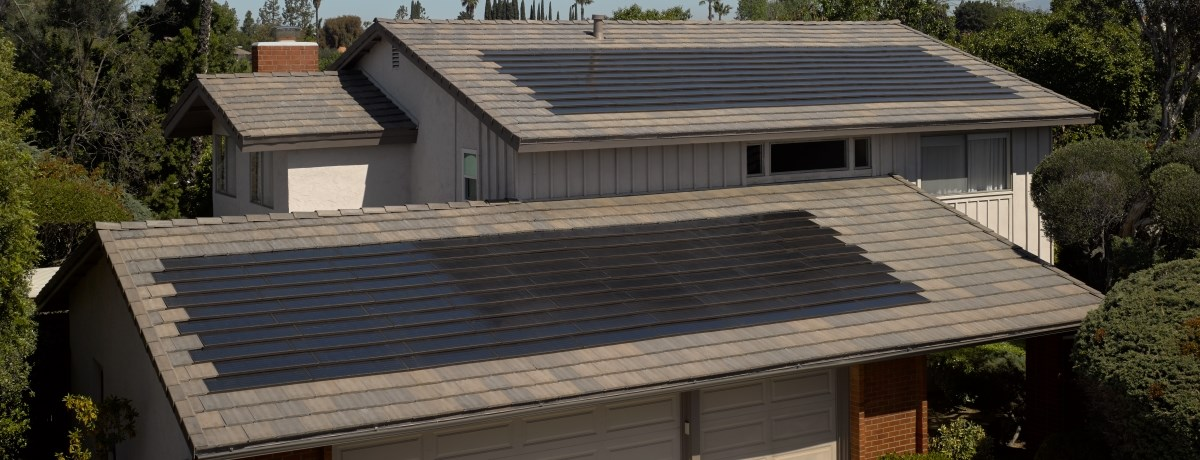
Roofing company CertainTeed’s Apollo II Tile system uses monocrystalline 60 W tiles that reach 15.3% efficiency. The company also offers a product warranty to guarantee production and has a large network of contractors who can install the product.

SolarRoof_LumaResources.png

Luma Resources

An early entrant into the BIPV market, Luma Resources was founded by two brothers in Rochester, Michigan. Their solar shingle is composed of a polycrystalline tempered glass module with a metal shingle base with a maximum power of 60W each. Their system pricing for this product comes at a high premium, starting at $6 per watt, roughly double the price of a normal solar system.

SolarRoof_DOW.png

Dow Powerhouse Solar

Dow Chemical Company had also been in the BIPV business until only a short while ago, but as of June this past summer the company has ceased production of their Powerhouse Solar BIPV product after being offered for five years.The thin-film panels were not as efficient at generating power as conventional PV systems, and the company axed the product in preparation for its pending merger with DuPont.

Still a ways to go

None of the companies profiled here have had runaway success with these solar roof products, but are well ahead of Tesla in development. Although visually appealing, solar roofs generally are too expensive and inefficient for most consumers.

Luma Solar’s shingle product, for example, is double the cost per watt of SolarWorld panels. Considering the added complexity of Tesla’s offering, there are no indications that their product will be any different when it is made available.

Greentech Media wisely pointed out how Musk has only revealed basic details for the solar roof but has “failed to address any of the serious, foundational challenges facing a car-company-turned-battery-and-solar-installer that wants to get a roof product to market.” Considering the challenge of promoting solar roofs while juggling a half dozen other emerging products that are complex in their own right, Tesla will certainly have it’s hands full in the months to come.

In a nutshell, it would be risky to wait for Tesla Roof Technology which may or may not work out. There are just too many uncertainties. You can start saving today with a proven technology that has been helping homeowners cut their electricity bills since the 1960s and has only gotten better.

What do you say, should we start taking a look at the numbers for you? Join our online marketplace and get free personalized bids confidentially from our installer network.


What Trump’s Presidency Means for the Solar Industry

By Solar Panel Installation Process No Comments

The election of Donald Trump to the office of President of the United States is expected to have a profound impact on the future of environmental and renewable energy policy in America. Trump has suggested that climate change is a hoax perpetuated by the Chinese to make U.S. manufacturing non-competitive. Despite this, the Pew Research Center found that 84% of Trump supporters favor expanding solar energy production. So what kinds of policy can we expect regarding solar over the next four years?

The Clean Power Plan and the Paris Agreement Will Be Challenged

President-Elect Trump has selected Myron Ebell to lead his Environmental Protection Agency transition team. Ebell is currently the director of the Center for Energy and Environment at the Competitive Enterprise Institute, a conservative think tank that rejects the idea of human-caused global warming. He is a climate skeptic to say the least. Ebell considers the Clean Power Plan, which requires states to cut carbon emissions from fossil fuel power plants, to be illegal and has said on multiple occasions that the Paris climate agreement is an unconstitutional overreach of legislative power. We can expect Trump and Ebell to do everything in their power to undermine or repeal these agreements and policies, thus increasing the usage of fossil fuels for energy generation. That being said, the U.S. Energy Information Administration still predicts that 60 gigawatts of Coal energy generation capacity will be retired by 2030 and renewable capacity will continue to grow by 4% per year until 2040 without the Clean Power Plan in effect. In much of the country, the levelized cost of energy for solar is already below coal without government subsidy.

New Energy Research and Development May Lose Funding

The Department of Energy under the Trump Administration is expected to curb research and development funding for renewable technologies set up under Ernest Moniz. Greentech Media notes that there will likely be a massive “brain drain” under Trump’s Department of Energy. It is difficult to imagine scientists working under an energy secretary that denies climate change. Fortunately, the DOE’s Office of Energy Efficiency and Renewable Energy and Advanced Research Projects Agency have bipartisan support. Since changes to the DOE budget have to go through the legislature, these programs will not be cut without a fight. That being said, the fate of popular DOE programs for the solar industry like SunShot are up in the air.

What the Markets are Saying

Solar stocks were hit hard Wednesday morning following the election. President-Elect Trump is expected to allocate more resources toward fossil-fuel dependent energy sectors like oil, natural gas, and coal during his term. One byproduct of Trump’s tax cutting proposals is that the 30% Federal Investment Tax Credit (ITC) for solar could become less effective. Additionally, uncertainty about the future of renewables in the U.S. will likely make investors hesitant and limit the access to capital in the industry.

The Silver Lining

Despite these setbacks, the solar industry is still poised for tremendous growth. In December 2015, lawmakers approved the extension of the Federal ITC for an additional 5 years with bipartisan support making it unlikely that Trump will be able to repeal it. Progressive states will likely expand their own incentives for renewable power generation to combat the Federal deficiency as well. If industry trends continue, renewables will eventually beat fossil fuel energy generation on cost without Federal subsidies. Although solar adoption may take longer now, and U.S. carbon emissions will stay higher for longer, the Trump administration will be unable to fundamentally change the energy economics of the solar industry.

On November 8th Florida voters rejected Amendment 1, a misleading solar amendment that would have essentially eliminated rooftop solar in the state. The amendment establishes a right in Florida’s constitution to own or lease solar equipment. It also ensures that consumers who do not choose to install solar are not required to subsidize the costs of backup power and electric grid access to those who do. In effect this amendment would prevent the sale of solar energy back to the grid, eliminating net-metering and dramatically altering the economics of rooftop solar. This amendment was bankrolled by major utility players and its defeat represents a huge win for the rooftop solar industry.