Will Electricity Prices Go Down in 2026?
After several years of fast-rising electricity rates, many homeowners are feeling the pain of high electricity bills and wondering if utility rates will go down in 2026.
We’ll put it this way: Don’t hold your breath for electricity prices to drop.
While we don’t have a crystal ball, in this article we’ll look at trends, forecasts, and economic forces to get a sense of what to expect from electricity prices in 2026 and beyond.
Jump ahead:
See it for your home
Get your real solar price in 90 seconds
Enter your address — we’ll show the system, savings, and price for your exact roof. No sales calls.
Will utility electricity prices go down in 2026?
No, utility electricity prices are expected to continue rising in 2026. The U.S. power grid faces a growing imbalance in supply and demand, which leads to higher prices.
What’s increasing electricity demand?
- AI data centers
- Domestic manufacturing
- Electric vehicles
- Air conditioning for increasingly intense heat events
What’s holding back electricity supply?
- Slow permitting & interconnection processes for new power plants & transmission
- The “One Big Beautiful Bill” removing incentives for wind & solar
- Aging grid infrastructure in constant need of upgrades & repairs
- Long lead times for gas and nuclear power plants
With electricity demand expected to grow by 50% in the next 25 years, America needs all the new power plants and transmission lines it can get. However, Trump’s One Big Beautiful Bill removes incentives for the fastest and most cost-effective power sources: wind and solar.
Are electricity prices going up in 2026?
Yes, electricity prices are going up in several areas of the United States in 2026, according to utility rate filings. Some of the more notable rate increases proposed and planned for 2026 are listed below.
| State | Utility | Price increase | Timing |
| Colorado | Xcel Energy | 9% rate increase | August 2026 |
| Indiana | CenterPoint Energy | 7.3% increase to average bill | Early 2026 |
| New York | Con Edison | 2.8% rate increase | January 2026 |
| New York | NYSEG | 26.3% increase to average bill* | April 2026 |
| New York | Rochester Gas & Electric | 26% increase to average bill* | April 2026 |
| South Carolina | Dominion Energy | 12.7% increase to average bill* | July 2026 |
| California | San Diego Gas & Electric | $4 increase to average bill | January 2026 |
| Wisconsin | Xcel Energy | $13 increase to average bill | January 2026 |
| Delaware | Delmarva Power and Light | 16-23% increase to base rates* | July 2026 |
| Washington State | Seattle City Light | 5.4% rate increase | January 2026 |
| Washington State | Puget Sound Energy | 12% rate increase | January 2026 |
*Proposed electricity service price increase that may change during approval process.
What causes electricity prices to increase?
Electricity – at least when it comes from a utility company – is a commodity and is therefore subject to the forces of supply and demand. At the most basic level, electricity prices are rising because demand is outpacing supply.
After decades of relatively flat demand, electricity demand is increasing from home electrification, electric vehicle charging, and new power-hungry AI data centers coming online.
On the supply side, there are serious issues at the core of the electricity supply chain. For example, the central grid system itself is outdated and inefficient, and the cost of trying to upgrade or rebuild grid infrastructure is passed onto utility ratepayers.
Related reading: What’s the Average Electric Bill in Each State?
When will electricity prices go down?
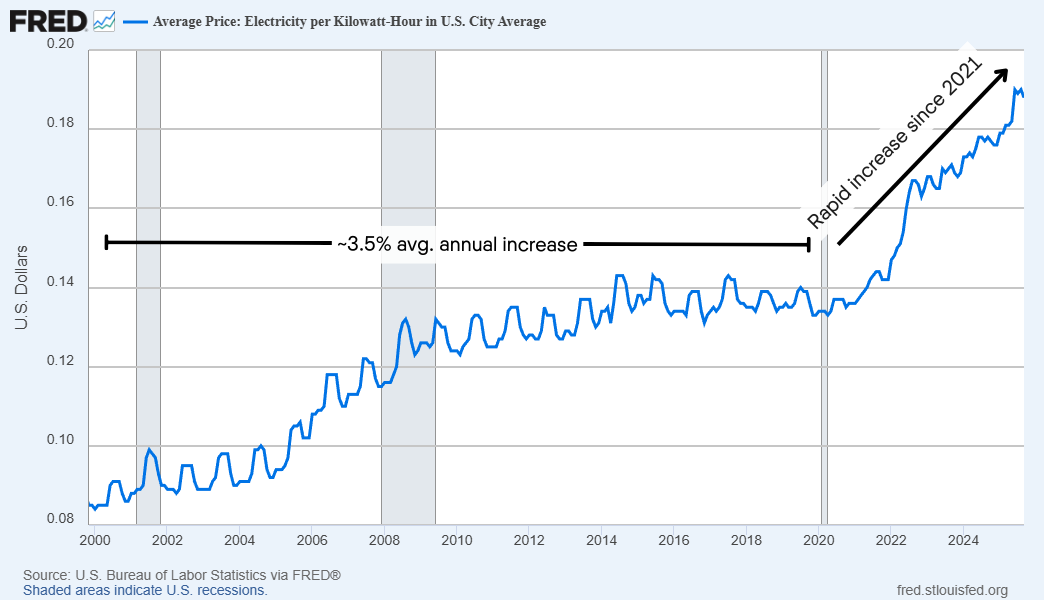
Given the market forces explained above, and a 45-year trend of rising electricity prices, it’s hard to imagine electricity prices coming down significantly in the near future.
The chart below shows the average electricity price in the US from 1979 to 2024. In that 45-year period, prices have increased at an average annual rate of 2.9% and have only decreased year-over-year nine times.
Historical Electricity Prices Chart
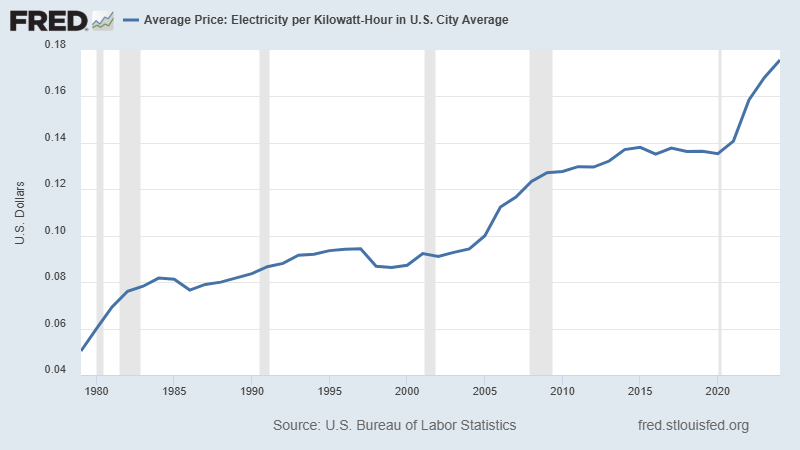
Based on this history, electricity prices may fall year-over-year once or twice every decade, but in the big picture, they will continue climbing at a steady rate. The only question is at what rate will they climb?
See it for your home
Get your real solar price in 90 seconds
Enter your address — we’ll show the system, savings, and price for your exact roof. No sales calls.
Electricity price forecasts: 2026 and beyond
Depending on where you live, residential electricity rates are projected to rise between 15% and 40% by 2030, according to ICF, and could double by 2050. The main cause: We’re using more and more electricity to power AI, industrial manufacturing, transportation, heating, and cooling, and we aren’t building energy infrastructure fast enough to balance supply and demand.
Unfortunately, the ICF rate forecast may end up being lower than reality. In July 2025, President Trump signed the “One Big Beautiful Bill” into law, which removed incentives and made it harder to build wind and solar projects needed to meet rising power demand.
Set a flat rate for your electricity
Even if electricity prices go down in 2026 or the coming years, they are all but guaranteed to continue rising in the long term based on market forces. Home solar allows you to set a flat rate for your electricity and hedge against energy inflation.
Learn more about hedging against energy inflation with solar.
Your next step
See exactly what solar costs on your roof
We use satellite data and your utility rates to show your price and payback in about 90 seconds, with no sales calls.