The Renter’s Guide to "No-Drill" Balcony Solar: Mounting, Safety, and Shading | Solar.com

Please enter a valid zip code.

The Renter’s Guide to “No-Drill” Balcony Solar: Mounting, Safety, and Shading

For decades, the “solar revolution” had a major gatekeeper: the roof. If you didn’t own a single-family home with a sturdy and sunny roof, you were stuck paying whatever the utility company decided to charge.

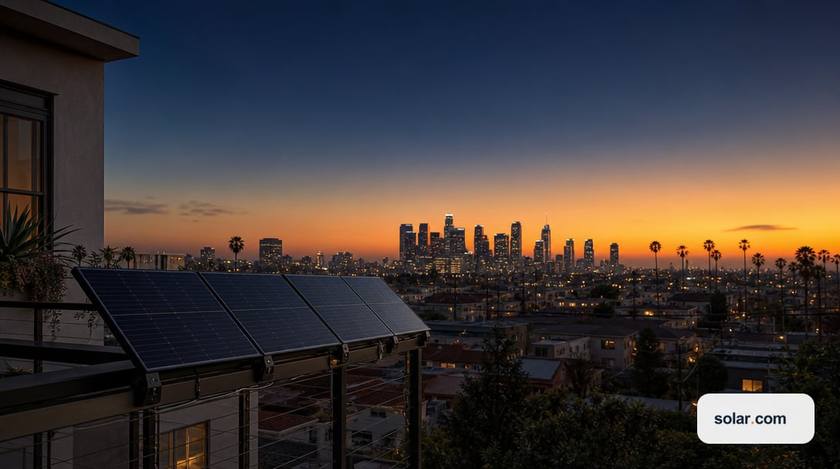
But in 2026, the game has changed. Thanks to new technology, safety standards, and an ongoing wave of plug-in solar legislation, apartment dwellers and renters are finally getting their turn in the sun. It’s called Balcony Solar, and it’s a way for renters to lower their energy costs and carbon footprint without sacrificing their security deposit by drilling holes in the wall.

Here’s what putting solar panels on your balcony or patio looks like, and how to maximize your savings potential.


“No-Drill” Hardware: How it Attaches

The most common question renters ask is: “How do I mount solar panels on my balcony without voiding my security deposit?” Balcony solar manufacturers have developed three main “renter-friendly” mounting styles that are as easy to install as a flower box or a bike rack:

  • The Rail Clamp: This is the most popular method. Heavy-duty, padded metal clamps grip your balcony railing. The solar panel then hooks onto these clamps. They are designed to fit standard round or square metal railings and can be removed in minutes when you move out.

  • The “Solar Fence” (Hook-and-Loop): Some newer systems use lightweight, flexible panels. These can be secured using high-strength, UV-resistant tension straps (similar to heavy-duty zip ties or velcro) that weave through the spindles of your balcony.

  • Weighted Floor Mounts: If your balcony has a glass railing or you aren’t allowed to hang anything over the edge, you can use a weighted triangular rack. These sit on the floor of your balcony and use heavy weights (like sandbags or patio stones) to keep the panels angled toward the sun.

In addition to complying with your rental agreement or HOA rules, the “no-drill” method makes it easy to take your solar panels with you if you move.


The Wind Factor: Is it Safe?

When you put a flat, wide object on a high-rise balcony, it has a tendency to act like a sail.

In a high-wind event, the pressure on a solar panel can be immense. This is why safety is the most important part of your setup. If you live on the 10th floor, the wind speeds are often significantly higher than they are at street level.

  • Check the Wind Rating: Before buying a kit, ensure the mounting hardware is rated for your local wind zone.

  • Use Safety Tethers: Even if your clamps are tight, always use a secondary “safety leash.” This is usually a steel cable that loops around a permanent part of the building. If a clamp fails, the tether prevents the panel from falling to the street below.

  • The 2026 Standard: Look for the UL 3700 certification. As we discussed in our Ultimate Guide to Balcony Solar, this certification ensures the mounting hardware has been tested for extreme weather and “pull-away” force.


Shading: Maximize Your Sun and Savings

Imagine a garden hose. If you put your foot on one part of the hose, the water stops flowing everywhere, not just under your foot.

Solar panels work the same way. If a shadow from a nearby tree, a neighbor’s balcony, or even your own railing covers just 10% of the panel, it can sometimes reduce the power output by 50% or more.

Tips for maximizing your sun and savings:

  • South is King: In the U.S., a south-facing balcony is the “Gold Medal” for solar. West-facing is the “Silver Medal” — great for catching the afternoon sun when electricity is most expensive. North-facing balconies, unfortunately, rarely produce enough power to justify the cost.

  • Mind the Railing: If you mount your panels inside the balcony railing, the bars of the railing will cast “stripes” of shadows across the panel all day. For the best results, panels should be mounted on the outside of the railing or tilted above the rail line.


Cable Management: Getting Power Inside

You’ve mounted the panels and the sun is hitting them—now how do you get that power to your wall outlet without leaving your balcony door wide open?

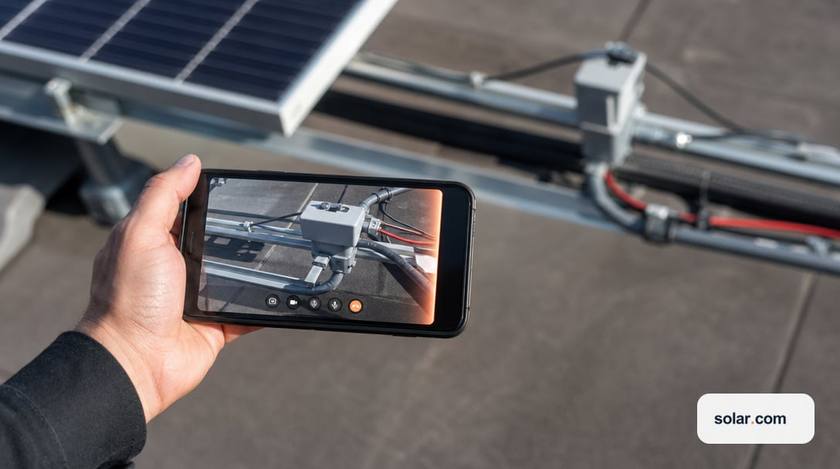
This is where the Flat Ribbon Cable comes in. These are specialized, ultra-thin electrical cables designed to sit in the track of your sliding glass door or window. They are thin enough that you can close and lock the door right over them. This maintains your home’s insulation and, more importantly, your security.

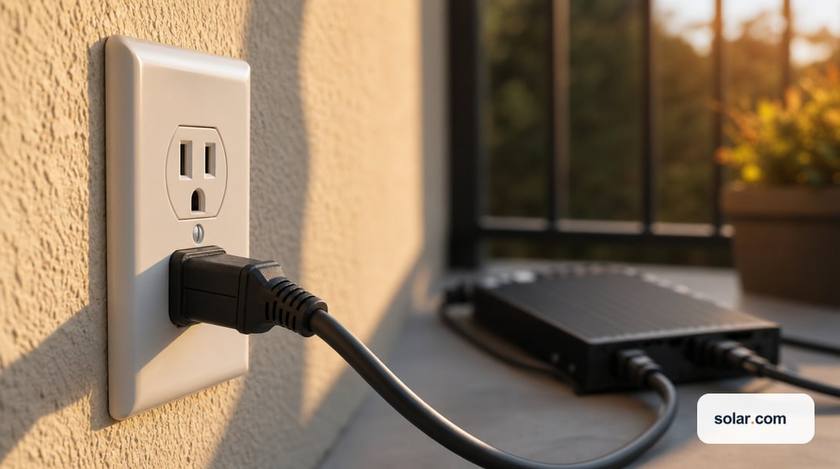
Once the cable is inside, it plugs into a small box called a Microinverter. This box converts the “raw” sun power into the same kind of electricity used by your toaster or TV. From there, you simply plug the system into any standard 120V wall outlet.

Again, UL 3700 certification is the gold standard for cables and microinverters with built-in safety and utility compliance features.

Talking to Your Landlord

While these systems are “plug-and-play,” it is always a good idea to check your lease. Most modern leases prohibit “permanent alterations.” Because no-drill solar is 100% portable and uses the same safety standards as a common household appliance, it usually doesn’t count as a permanent alteration.

When talking to your landlord, emphasize that:

  1. There is no drilling or structural change.

  2. The system is UL 3700 certified (the highest safety rating).

  3. It can be removed in 15 minutes without leaving a trace.


The Bottom Line

No-drill balcony solar is about taking control of your energy bill without needing to be a homeowner. By choosing the right mounting system and being smart about shading, you can turn your apartment into a mini-power plant one weekend.

Return to

How Does Solar Power Work on a House? Your Questions Answered

⇠ Return

See how much solar panels cost in your area.

Please enter a valid zip code.


Please enter a valid zip code.

Zero Upfront Cost. Best Price Guaranteed.

Topics

Best Solar Panels for Homes in 2026

Trying to determine the best solar panels for your home is like trying to determine the best car – there’s no single correct answer. Everybody...

Learn More

Solar Panel Efficiency - Pick the Most Efficient Solar Panels

You may hear the term “efficiency” thrown around a lot when reading up on solar panels. It sure sounds like a good thing, but what...

Learn More

Solar Inverters: Types, Pros and Cons

What is a solar inverter? Solar energy doesn’t provide electricity in a format that your table lamp could be powered by. Inverters change the power...

Learn More

Solar Providers Near Me

When beginning your home solar project, you might start by searching “Solar Providers Near Me.” Then, you'll be presented with dozens of different solar companies...

Learn More

Solar Panel Installation Process

Transitioning to power from solar panels is an exciting step for homeowners. There are several steps in the process which ensure the homeowner gets a...

Learn More

Charging Your EV With Solar Panels

Ditching your gas-guzzler for an electric vehicle (EV) is a great way to lower the cost and emissions of getting from A to B. But...

Learn More

Community Solar

It’s no secret that many of us spend a large portion of our income on energy and electricity bills. In fact, in 2012 we spent...

Learn More

Solar for Condo Owners

Solar for condominium unit owners is gaining steady popularity throughout the country, as more and more states are writing legislation to promote clean energy accessibility....

Learn More

Key Solar Terms

Going solar isn't something people do everyday and unless you have an electrical engineering degree, it's likely you'll bump into some new phrases and terms....

Learn More